Back Pain Doctor
Masters Athletes and Staying Active After 40
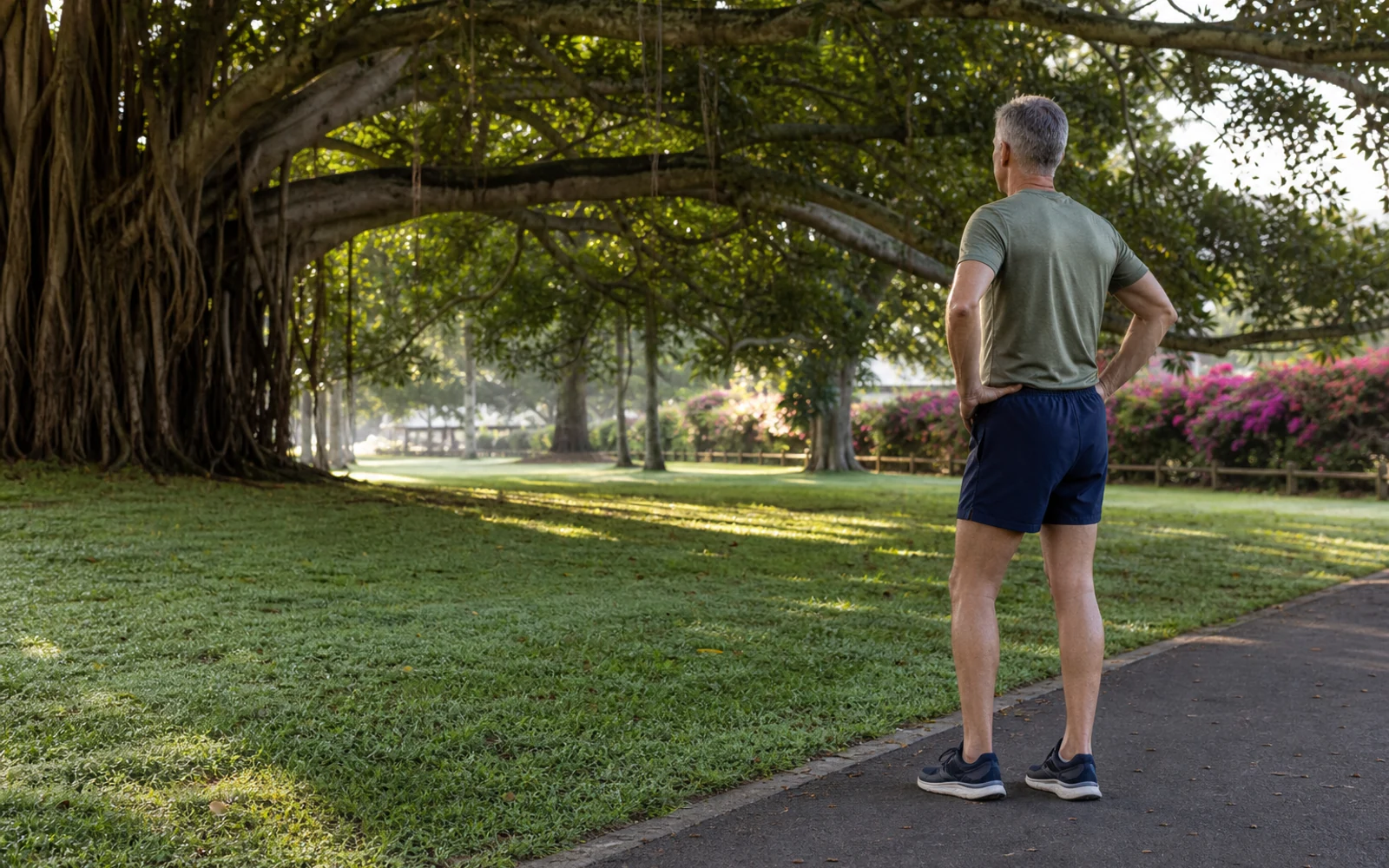
The most common advice given to active adults with joint or tendon pain is to do less of what they enjoy. It is rarely the right advice, and it is almost never the whole answer. Ageing tissue tolerates load differently, but it still adapts to it.
Osteoarthritis is not a reason to stop
Radiographic osteoarthritis is common from midlife onwards and correlates poorly with symptoms — many people have changes on imaging and no pain, and some have significant pain with modest changes. A diagnosis of osteoarthritis is not a prognosis and it is not an instruction to stop exercising.
Exercise is the best-evidenced treatment for symptomatic knee and hip osteoarthritis, and appropriately loaded activity does not accelerate joint damage. What generally needs adjusting is the distribution of load — how much impact, how much volume, how it is progressed — rather than whether you participate at all.
Tendons after 40
Tendinopathy in a masters athlete tends to be slower to settle, more sensitive to sudden increases in volume, and more likely to be sitting on a background of reduced capacity rather than a single training error. It still responds to progressive loading — it just needs a longer runway and less tolerance for the stop-start pattern of training hard when it feels good and stopping when it flares.
This is also the group in which adjuncts are most often considered, and where being clear about the evidence matters most. Shockwave therapy has reasonable support in chronic tendinopathy when combined with loading. Platelet-rich plasma has a mixed and heterogeneous evidence base that varies considerably by tendon and by protocol. You should expect to be told which of those applies to your problem, including when the honest answer is that the evidence is weak.
Bone health is part of the picture
A low-trauma fracture after 50, a marked loss of height, long-term corticosteroid use, early menopause or a strong family history are all reasons to consider bone density assessment rather than treating a fracture as bad luck. Bone stress injuries in older endurance athletes deserve the same consideration.
Resistance training and impact loading are among the few interventions that positively influence bone, which is another argument against the reflexive advice to switch everything to swimming and cycling.
Setting the goal properly
The clinically useful question is not whether your imaging looks like a 25-year-old's. It is what you want to be able to do, what is currently limiting that, and which of those limits are modifiable. Some are. Some are not, and being told plainly which is which is more useful than optimism.
Head injury
A suspected concussion is managed separately from a musculoskeletal injury, and both the AFL and Rugby Australia require a medical doctor to clear a player before a return to contact. What that involves, the stand-down periods that apply, and the graded return to learn and sport are set out in the concussion section .
Booking
No referral is required and a Medicare rebate applies to the consultation. Appointments are booked online through HotDoc, where current availability is shown. Fees and the rebates that apply are set out on the fees page.
Conditions we see in masters athletes and staying active
Each guide covers the likely symptoms, whether imaging helps, and where treatment fits.
Common questions
Will running or lifting wear my joints out faster?
I have been told I have arthritis and should stop playing. Is that right?
Is PRP worth it for my tendon problem?
Do I need imaging before starting treatment?
Injured, or not getting back to full training?
Book a sports injury assessment with Dr Joshua Hatch.
Assessment aimed at what is actually limiting you, an honest read of your imaging, and a loading plan that gets you back to your sport. Non-surgical options are discussed with the evidence behind each one, including what it will not do.
Book an appointment