Back Pain Doctor
Gym and Strength Training Injuries
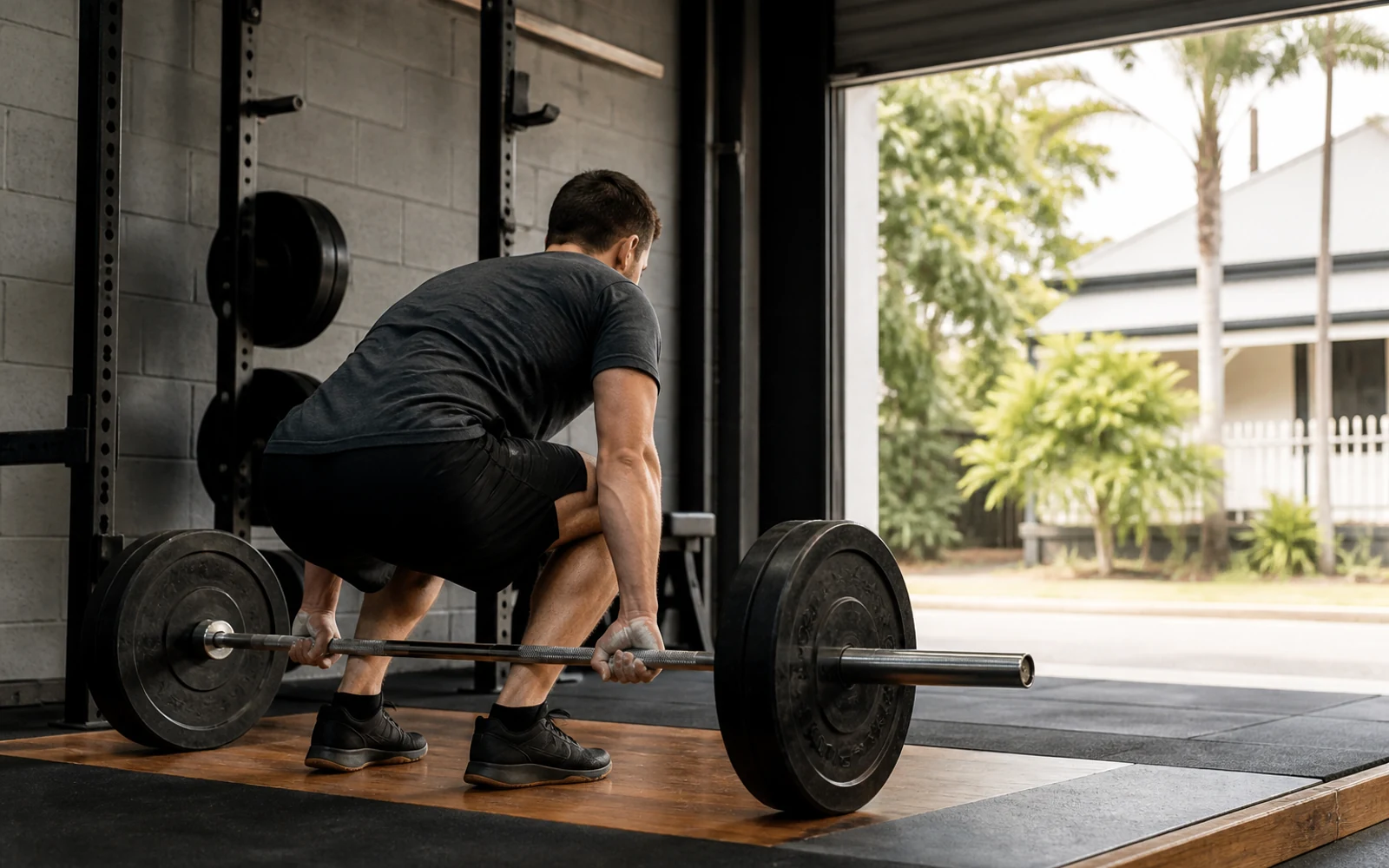
People who lift generally do not want to be told to rest. They want to know which movements are safe to keep, which need to change, and for how long. That is a more useful conversation than a blanket instruction to stop, and it is usually the more accurate one.
Back pain in a lifter is not a structural verdict
Lower back pain after a heavy session is common, frightening, and usually not a sign that something has been damaged permanently. Disc bulges, annular changes and facet arthropathy appear on scans of large numbers of people who have no pain at all, so finding one does not establish that it is the cause of yours.
What matters clinically is the pattern: what provokes it, what settles it, whether there is leg pain or neurological change, and how it has behaved over time. Where there is progressive weakness, saddle numbness or bladder or bowel change, that is a different situation entirely and needs urgent assessment rather than a clinic appointment.
Deload rather than stop
For most training-related pain the useful intervention is modifying the stimulus, not removing it. That might mean changing range, tempo, grip or stance, substituting a movement pattern for a period, dropping intensity while holding frequency, or reversing the order of a session so the painful movement is not done fatigued.
Removing training altogether tends to produce a deconditioned athlete with the same problem waiting for them, plus the psychological cost of being out. Where a genuine pause is required, you will be told what it is protecting and what you should be doing in the meantime.
The shoulder and the elbow
Loaded shoulders account for a large share of what we see — rotator cuff-related pain, biceps-related anterior pain, calcific tendinopathy and, in overhead athletes, labral presentations. Most rotator cuff-related shoulder pain is managed without surgery, and the evidence for structured exercise is strong.
Elbow pain in lifters and climbers is usually tendon-related at the common extensor or flexor origin, or distal biceps in the case of a sudden loaded eccentric. A sudden pop with a loaded biceps curl or deadlift, with visible change in muscle contour, is a different problem and needs prompt assessment because the surgical window for a distal biceps tear is limited.
Where treatment fits
Load management and progressive strengthening remain the foundation. Where a tendon problem has genuinely stalled despite good rehabilitation, shockwave therapy is discussed as an adjunct against the evidence for that specific tendon. Ultrasound-guided injections are used where a targeted diagnostic or therapeutic block is likely to change the plan, not as a routine first step.
Booking
No referral is required and a Medicare rebate applies to the consultation. Appointments are booked online through HotDoc, where current availability is shown. Fees and the rebates that apply are set out on the fees page.
Conditions we see in gym, strength and crossfit
Each guide covers the likely symptoms, whether imaging helps, and where treatment fits.
Common questions
Can I keep training with an injury?
I had a scan that showed disc bulges. Should I stop deadlifting?
My shoulder hurts overhead. Do I need an MRI?
How quickly should I be seen after a sudden pop while lifting?
Injured, or not getting back to full training?
Book a sports injury assessment with Dr Joshua Hatch.
Assessment aimed at what is actually limiting you, an honest read of your imaging, and a loading plan that gets you back to your sport. Non-surgical options are discussed with the evidence behind each one, including what it will not do.
Book an appointment