Back Pain Doctor
Field and Court Sport Injuries
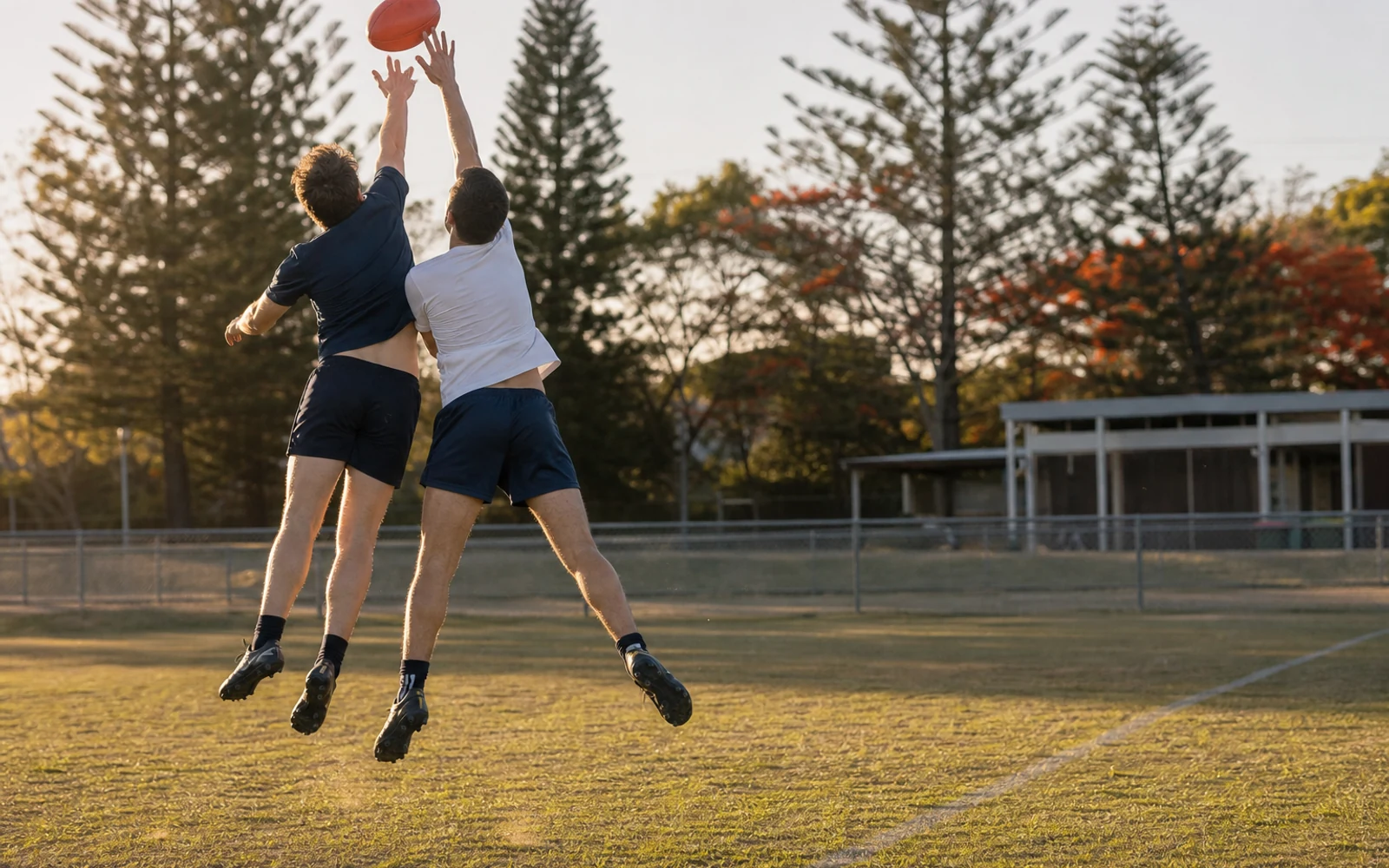
Field and court sport injuries are mostly acute, and the decisions that matter are made early: is this something that needs imaging today, is it something that needs an orthopaedic opinion, and what does a graded return actually look like for this sport.
The first 48 hours
For most acute soft-tissue injuries the current advice is to protect the area and keep it moving within comfort, load it progressively as symptoms allow, avoid anything that markedly increases pain, and get an early assessment if you could not continue playing, could not weight-bear, heard or felt a pop, or the joint felt like it gave way.
Prolonged complete rest and immobilisation are no longer recommended for most soft-tissue injuries — they delay the return of capacity without improving the outcome. Ice is reasonable for comfort in the first day or two but does not change healing.
A knock to the head is a separate matter. Any suspected concussion means immediate and permanent removal from that game or training session and medical assessment, regardless of how quickly the player says they feel fine. Current Australian community-sport concussion guidance is conservative for good reason, and no return-to-play decision should be made on the sideline.
When imaging is actually warranted
Most ankle sprains do not need an X-ray, and the Ottawa ankle rules exist precisely to identify the minority that do — bony tenderness over the specific malleolar or midfoot landmarks, or an inability to weight-bear for four steps immediately and at assessment.
For hamstring and calf injuries, imaging changes management mainly where a high-grade or tendon-involving tear is suspected, or where the timeline matters for a specific reason. For the knee, an inability to straighten the leg, a joint that locks, or a joint that gave way and swelled within hours all warrant assessment and often imaging.
Graded return to play
Returning to sport is staged, and each stage has to be tolerated before the next is added: pain-free daily function, then straight-line running, then change of direction, then sport-specific drills, then contact or full training, then match play. Skipping stages is the most common reason a hamstring injury becomes a recurrent one.
Reinjury risk is highest in the first weeks after returning, and it is higher again when the return was driven by a date rather than by capacity. Where the timing of a final, a selection or a season matters to you, that is worth discussing openly at the assessment so the trade-off is explicit rather than accidental.
Working with your physio and club
Most of the rehabilitation for these injuries is done by a physiotherapist, and that is the right arrangement. The role here is the diagnostic question, the imaging decision, the medical management of the injury, deciding whether an orthopaedic or specialist opinion is needed, and being available when a problem is not following the expected course.
Head injury
A suspected concussion is managed separately from a musculoskeletal injury, and both the AFL and Rugby Australia require a medical doctor to clear a player before a return to contact. What that involves, the stand-down periods that apply, and the graded return to learn and sport are set out in the concussion section .
Booking
No referral is required and a Medicare rebate applies to the consultation. Appointments are booked online through HotDoc, where current availability is shown. Fees and the rebates that apply are set out on the fees page.
Conditions we see in field and court sports
Each guide covers the likely symptoms, whether imaging helps, and where treatment fits.
Common questions
I rolled my ankle. Do I need an X-ray?
How long until I can play again after a hamstring injury?
Do you provide return-to-play clearance?
My child plays club sport and keeps getting the same injury. Is that worth assessing?
Injured, or not getting back to full training?
Book a sports injury assessment with Dr Joshua Hatch.
Assessment aimed at what is actually limiting you, an honest read of your imaging, and a loading plan that gets you back to your sport. Non-surgical options are discussed with the evidence behind each one, including what it will not do.
Book an appointment