Back Pain Doctor
Concussion Assessment & Medical Clearance Brisbane
Emergency
Call an ambulance on 000 if any of these are present
- Neck pain or tenderness
- Double vision
- Weakness, tingling or burning in the arms or legs
- Severe or increasing headache
- Any seizure or convulsion
- Loss of consciousness
- Deteriorating consciousness — increasingly drowsy or hard to rouse
- Repeated vomiting
- Increasingly restless, agitated or combative behaviour
- Any concern that the person is getting worse rather than better
These need an ambulance or an emergency department now — not a clinic appointment, and not a period of watching to see how things go. This practice does not provide emergency or after-hours care.
The clearance your club needs
Return to contact is a medical decision
Physiotherapists play an important role in rehabilitation and the graded return to sport. The final step is different: AFL community football and Rugby Australia require clearance from a medical doctor before a player returns to full-contact training or play.
Dr Hatch provides the medical assessment and documentation, checks the current rules and forms for your sport, and works with your physiotherapist, school or club where needed. No referral is required and a Medicare rebate applies to the consultation.
Concussion is a clinical diagnosis, not a scan finding, and it is managed by a staged return to thinking and then to sport rather than by rest alone. Athletes from every sport are assessed here under the ANZ Concussion Guidelines. Where a governing body has additional stand-down, clearance or documentation requirements, those are applied as a second layer rather than used to define who can be seen.
These pages set out what the current Australian guidance actually says, in more detail than a summary page usually goes to, with links to every source so you can check it. They are written to be useful to a parent on the boundary line, a player working through a stand-down, and a physiotherapist or club official who needs the rule rather than the gist.
The clinical content follows the ANZ Concussion Guidelines — the Australian and New Zealand clinical practice guideline led by the University of Queensland, covering concussion at every age and from any cause. It is the primary clinical framework here regardless of sport. The AFL community guidelines updated in May 2026 and the Rugby Australia concussion procedure are used because they are detailed examples of how individual codes implement recognition, stand-down and clearance. They are not the only sports seen here.
Every sport is seen
The same ANZ clinical framework is used whether the concussion occurred in football, rugby, netball, basketball, hockey, combat sport, cycling, equestrian sport or another activity. Your own sport's policy is checked for any extra stand-down, clearance or paperwork requirements.
Scope of practice
Dr Hatch is a Fellow of the RACGP — a specialist general practitioner — with extended skills in musculoskeletal, sports and exercise medicine, and holds the Diploma in Musculoskeletal Medicine from the Faculty of Sport and Exercise Medicine (UK). He is not a Sport and Exercise Medicine Physician (FACSEP) and does not hold specialist registration in that field. No emergency or after-hours care is provided. Where a recovery needs a sport and exercise medicine physician, a neurologist or an interdisciplinary concussion service, you will be referred.
Inside the injury
The neurometabolic cascade
The neurometabolic cascade is the name given to the overlapping ionic, metabolic and physiological changes set in motion when a mechanical force disrupts neuronal membranes. It helps explain how concussion can alter brain function even when a routine CT or MRI does not show structural injury.
Much of the detailed sequence comes from experimental models, with growing support from human imaging and physiological studies. The timings below describe a broad sequence: phases overlap, vary between people and are not a recovery clock or a way to decide return-to-sport clearance.
Select a phase to see what is happening.
01 Immediate ionic flux Seconds to minutes
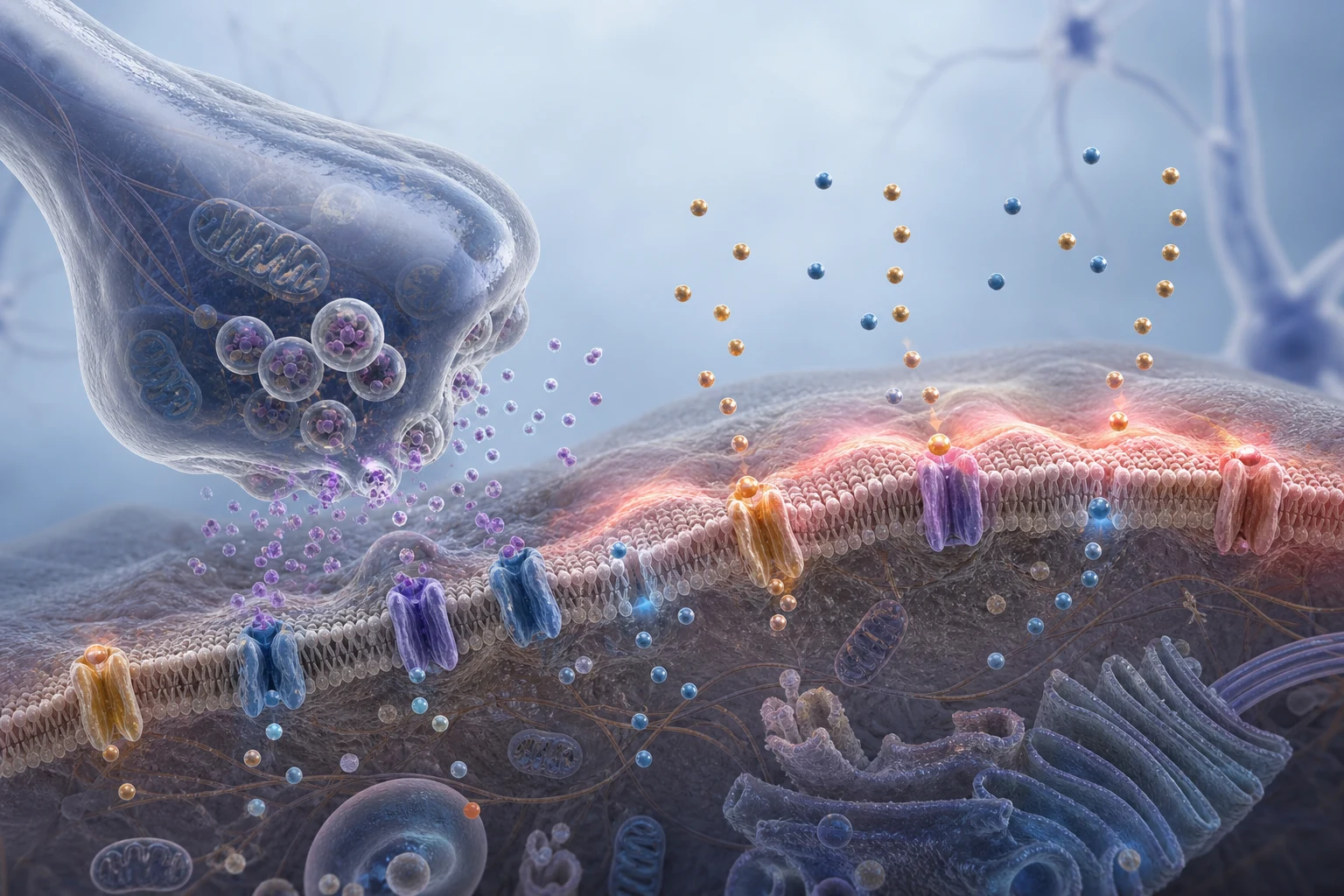
Mechanical force stretches neuronal and axonal membranes. That can disturb ion channels and trigger an abrupt wave of electrical and chemical activity.
- 1 Glutamate release: Excitatory neurotransmitters are released indiscriminately, adding to widespread neuronal depolarisation.
- 2 Ion shifts: Potassium (K+) moves out of neurons while sodium (Na+) and calcium (Ca2+) move into cells.
- 3 Spreading depolarisation: The disturbance can propagate through neural tissue in a spreading-depression-like pattern.
Why this matters clinically
The brain must now spend extra energy restoring the ion gradients that normal signalling depends on. This is the start of the post-concussion energy challenge.
02 Metabolic energy crisis Minutes onward
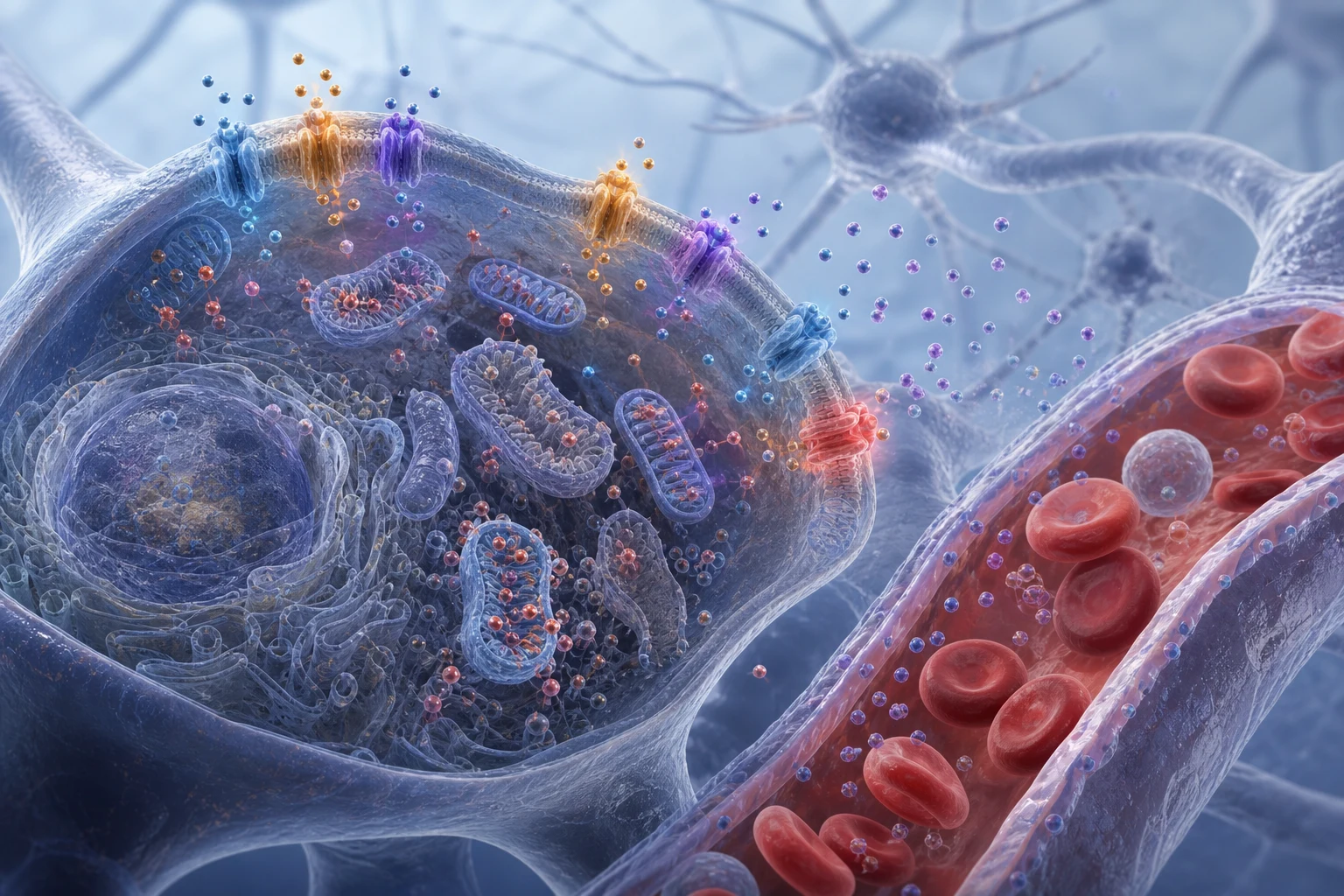
Restoring cellular balance is expensive. Energy demand rises at the same time that the systems supplying and producing that energy may be working less efficiently.
- 1 ATP demand rises: Sodium-potassium pumps work harder to restore membrane potential and consume more ATP.
- 2 Glucose use increases: Glycolysis is upregulated to meet demand, which can increase lactate production and draw down energy reserves.
- 3 Supply and demand become mismatched: Human studies show that cerebral blood flow, oxygen use and glucose metabolism can all change after concussion; the pattern is more complex than a single uniform drop in blood flow.
- 4 Mitochondria are stressed: Intracellular calcium can impair oxidative metabolism and contribute to oxidative stress.
Why this matters clinically
The result is a temporary period in which energy needs can exceed the brain's ability to meet them efficiently. The model helps explain why repeat injury is avoided and activity is progressed in stages, but it cannot determine an individual's clearance date.
03 Impaired neural signalling Days to weeks — variable
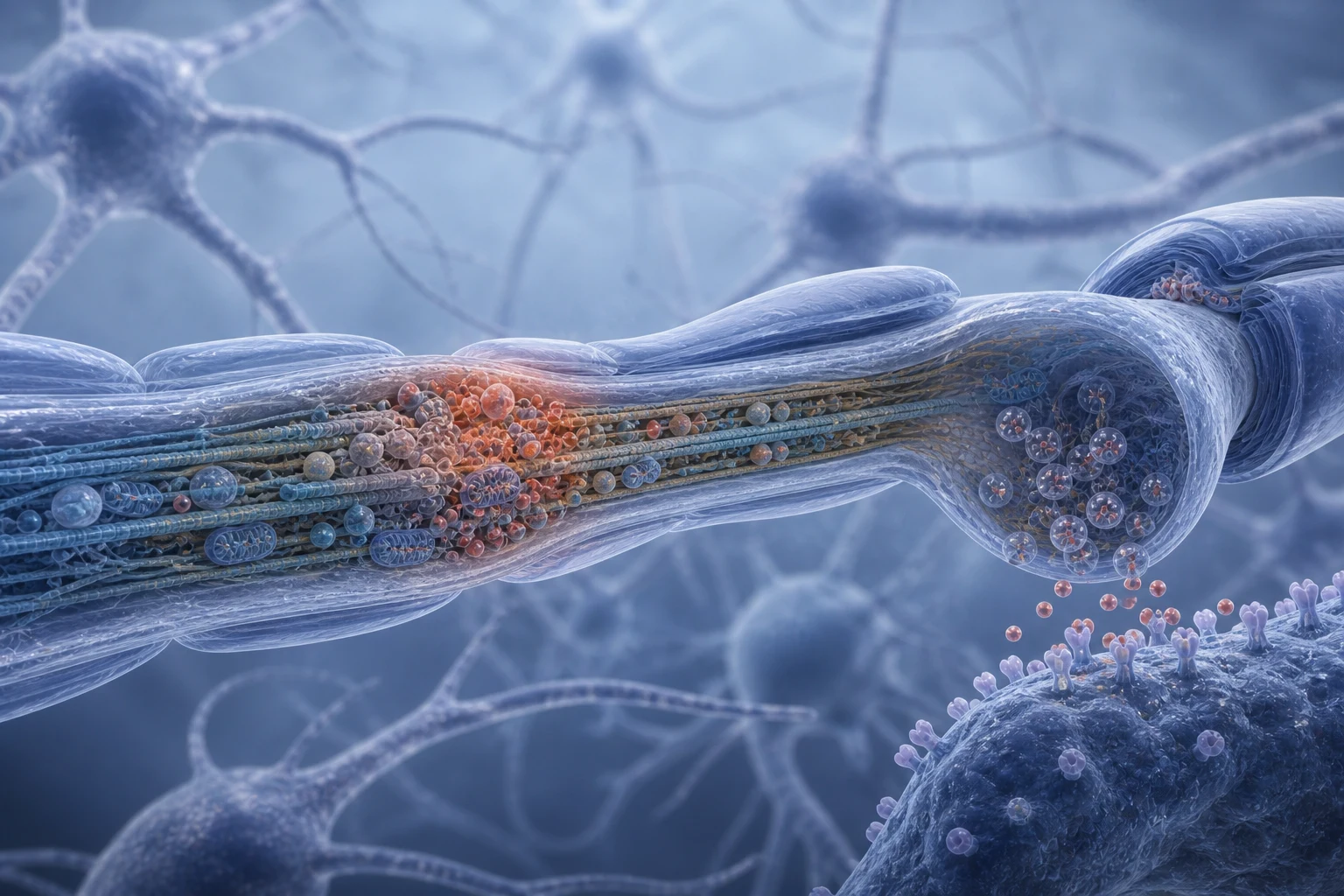
The metabolic and structural disturbance can temporarily make neural networks less efficient, affecting how signals travel within and between cells.
- 1 Axonal function: Stretching and cytoskeletal disruption can interfere with axonal transport and signal transmission.
- 2 Neurotransmitter systems: Excitatory, inhibitory and modulatory signalling can be temporarily altered, affecting cognition, mood, sleep and sensory processing.
- 3 Membrane and receptor function: Ongoing changes in membrane permeability and cellular signalling can make network activity less coordinated.
- 4 Magnesium findings: Intracellular magnesium depletion has been demonstrated in experimental traumatic brain injury, but its timing and clinical importance in an individual human concussion remain uncertain.
Why this matters clinically
Function usually restores gradually, but symptoms, clinical recovery and cellular recovery do not move in lockstep. Return-to-learn and return-to-sport decisions therefore rely on clinical assessment and graded exposure, not on assigning someone to a cascade phase.
04 Altered cerebral blood flow and autoregulation Minutes to weeks — variable
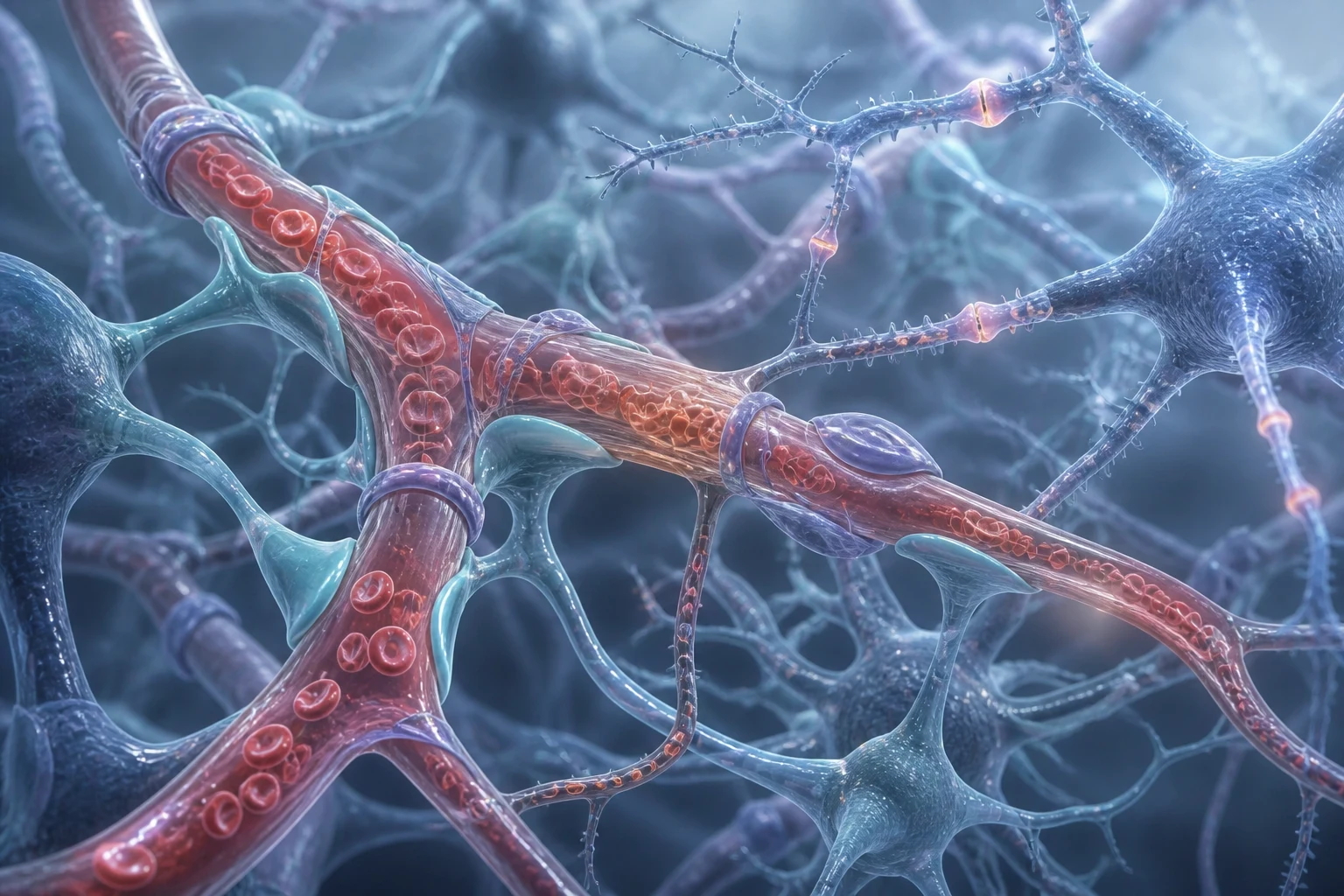
The brain normally keeps blood flow relatively stable and redirects it toward active tissue. After concussion, the systems that regulate vessel diameter and match flow to demand can become temporarily less predictable.
- 1 Autoregulation: Small cerebral vessels normally constrict or dilate as blood pressure changes. Dynamic studies suggest that the timing or strength of this response can be altered after concussion.
- 2 Carbon-dioxide reactivity: Carbon dioxide is a powerful regulator of cerebral vessel diameter. Concussion can alter the haemodynamic response to breathing, exertion and changes in CO2.
- 3 Neurovascular coupling: Active neurons usually call for extra local blood flow. After concussion, that response may be delayed, reduced or exaggerated, and can remain altered after symptoms have settled in some studies.
- 4 There is no single flow pattern: Depending on age, timing, brain region and measurement method, studies have found lower, higher or regionally mixed blood flow. A simple claim that all concussion causes global vasoconstriction is not supported.
Why this matters clinically
Disturbed flow control may contribute to headache, dizziness, cognitive fatigue and exercise intolerance, but cerebral blood-flow tests are not routine diagnostic or clearance tools. Graded symptom-limited exercise can help assess physiological tolerance within a clinical recovery plan.
05 Neuroinflammatory and glial response Hours to weeks or longer — variable
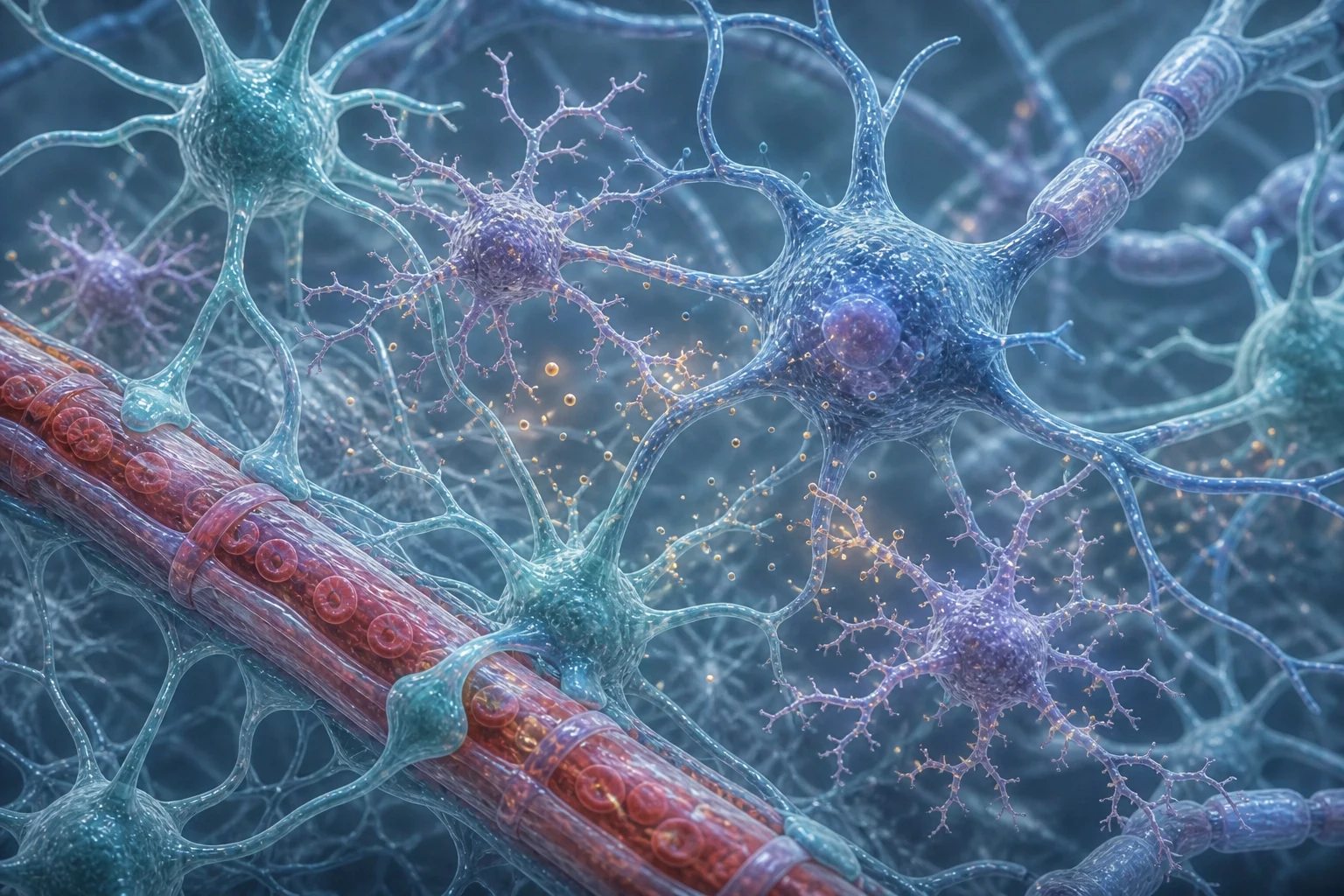
Concussion also activates the brain's immune and support cells. This response is not simply harmful: it helps clear damaged material and organise repair, but a poorly regulated or prolonged response may also disrupt normal function.
- 1 Microglial activation: Resident immune cells change state, move toward stressed tissue and release signalling molecules that coordinate cleanup and repair.
- 2 Astrocyte response: Astrocytes help regulate ions, neurotransmitters, energy supply and the blood-brain barrier; concussion can alter these support functions.
- 3 Cytokine and immune signalling: Prospective athlete studies show early changes in inflammatory proteins and immune-response gene expression, followed by a changing pattern over subsequent days and months.
- 4 Barrier and vascular interaction: Inflammatory signalling can interact with the cerebral vasculature and blood-brain barrier, linking immune, metabolic and blood-flow responses rather than creating a separate linear phase.
Why this matters clinically
Inflammation is a plausible contributor to symptoms and persisting problems, but blood or cerebrospinal-fluid inflammatory markers are research tools rather than routine concussion tests. They cannot currently diagnose concussion, predict an individual's recovery or determine clearance.
This explainer is based on the translational model described by Giza and Hovda, its 2026 update, and prospective human studies of neurovascular coupling and immune signalling. It is a model of biology, not a diagnostic test, treatment protocol or return-to-sport timetable.
The ANZ framework, then your sport's rules
The ANZ Concussion Guidelines are the clinical starting point for every sport and set a minimum of 21 days from injury before return to sport. A governing body may add its own stand-down, clearance process or documentation. The table uses AFL and rugby to show how those code-specific layers can differ; it is not a list of the only athletes seen here.
| Clinical framework or code example | Adults | Children and adolescents | Who clears the player |
|---|---|---|---|
| ANZ Concussion Guidelines (national clinical guideline) | Minimum 21 days from injury before return to play | Minimum 21 days from injury before return to play | A qualified health care professional monitors and approves each stage; a medical doctor should confirm the diagnosis |
| AFL — community football | Earliest return is the 21st day after the concussion | Earliest return is the 21st day after the concussion | Only a medical doctor can clear a player for full-contact training or competition |
| AFL / AFLW — elite | Minimum 12 days | Not applicable | Club medical staff, in an advanced care setting |
| Rugby Australia | Minimum 12 days for players aged 19 and over | Minimum 21 days for players aged 18 and under | A medical doctor, with the Concussion Referral and Return form completed |
A stand-down is a floor, not a target, and reaching it is not a clearance. Meeting the minimum means a player is no longer prohibited from being assessed as ready — the clinical decision is separate from the calendar. How the staged return works →
In this section
What we provide
For players, parents, schools and community clubs across Brisbane. No referral is needed and a Medicare rebate applies to the consultation.
Assessment and diagnosis
Confirming whether this is a concussion, excluding the things that are not, and identifying the contributors — neck, vestibular, visual, sleep, mood — that determine how the recovery will actually go. The national guidelines recommend a medical doctor confirm the diagnosis.
Medical clearance for return to contact
Medical return-to-sport assessment and documentation are available for athletes from every sport. The ANZ Concussion Guidelines provide the clinical framework, with the requirements and forms of the athlete's own code applied where relevant. AFL community football and Rugby Australia are two clear examples that specifically require a medical doctor before return to full contact.
Supervising the graded return
Running the staged return-to-learn and return-to-sport progression with you, your physiotherapist and your school or workplace — including what to do when a stage fails, which is the point at which most recoveries stall.
Prolonged recovery
Symptoms persisting beyond four weeks warrant a structured reassessment rather than more of the same advice. That means revisiting the diagnosis and treating what is actually maintaining the symptoms, with interdisciplinary referral where it is needed.
Pre-season baseline assessment
Available for clubs and individuals who want it, with an honest account of what it does. A baseline gives an individual comparison point. It does not diagnose concussion, it does not determine return to play, and its value is limited in children and adolescents because of developmental change.
Club policy and education
Advisory work for community clubs on concussion policy, sideline processes, record-keeping and education for coaches, trainers and parents. The most common gap in community sport is having no reliable pathway to a doctor for clearance — that is worth solving before the season, not during it.
Appointments are booked online through HotDoc. Clubs wanting to discuss policy, education or a clearance pathway for the season can get in touch through the contact page.
Common questions
Do I need a referral for a concussion appointment?
Do you only see AFL and rugby players?
Can you provide the medical clearance my club needs?
How long will I be out?
Should I go to the emergency department or book here?
Do you see children and adolescents with concussion?
Is Dr Hatch a concussion specialist?
Where this information comes from
Everything in this section restates published guidance and links back to it. Nothing here replaces the source documents, and for a club policy or a dispute about a stand-down you should work from the originals.
- ANZ Concussion Guidelines ↗
The primary clinical framework used throughout this section. The Australian and New Zealand guideline covers concussion from any cause across all ages, including athletes from every sport.
- AFL — concussion hub and community guidelines ↗
The Management of Sport-Related Concussion in Australian Football, updated May 2026, plus club, parent and coach resources and the PlayHQ clearance workflow.
- Rugby Australia — concussion management ↗
The Blue Card procedure, minimum stand-down periods and the Graduated Return to Play protocol for Australian rugby.
- Concussion in Australian Sport ↗
The Australian Sports Commission and Australian Institute of Sport cross-code portal, with guidance and resources for youth and community sport.
- Giza and Hovda — The New Neurometabolic Cascade of Concussion ↗
The foundational translational review of ionic flux, altered energy metabolism, mitochondrial dysfunction, axonal change and impaired neurotransmission after concussion.
- Flavin et al — Evolution of the Neurometabolic Cascade of Traumatic Brain Injury ↗
A 2026 update that places the classic neuronal cascade within a broader account of cellular, network and physiological responses to traumatic brain injury.
- Wright et al — Neurovascular coupling after sport-related concussion ↗
A prospective athlete study showing altered timing and magnitude of the cerebral blood-flow response to visual activation after concussion.
- Champagne et al — Cerebral perfusion and metabolism after sport-related concussion ↗
A calibrated MRI study linking lower resting perfusion in the studied group with reduced regional oxygen metabolism, illustrating that blood flow and metabolic demand must be interpreted together.
- Di Battista et al — Acute serum inflammatory markers after concussion ↗
A prospective athlete study finding early changes in IL-6 and IL-1 receptor antagonist after sport-related concussion.
- CARE Consortium — Blood gene-expression changes after sport-related concussion ↗
A large prospective collegiate-athlete cohort showing an immediate activation and later alteration of cytokine and immune-response signalling pathways.
Last reviewed 2026-08-26. Code protocols are revised regularly, usually before the season. This page is general information and is not a substitute for individual medical advice.
Had a head knock, or not right since one?
Book a concussion assessment with Dr Joshua Hatch.
Doctor-led assessment, a graded return-to-learn and return-to-sport plan, and the medical clearance needed before going back to contact. No referral is required, and symptoms that have dragged on are worth reviewing rather than waiting out.
Book an appointment