
De Quervain Tenosynovitis: What Helps Thumb-Side Wrist Pain?
New mothers are often surprised by where the aches of early parenthood turn up. For a good number it is not the back. It is the wrist, on the thumb s...

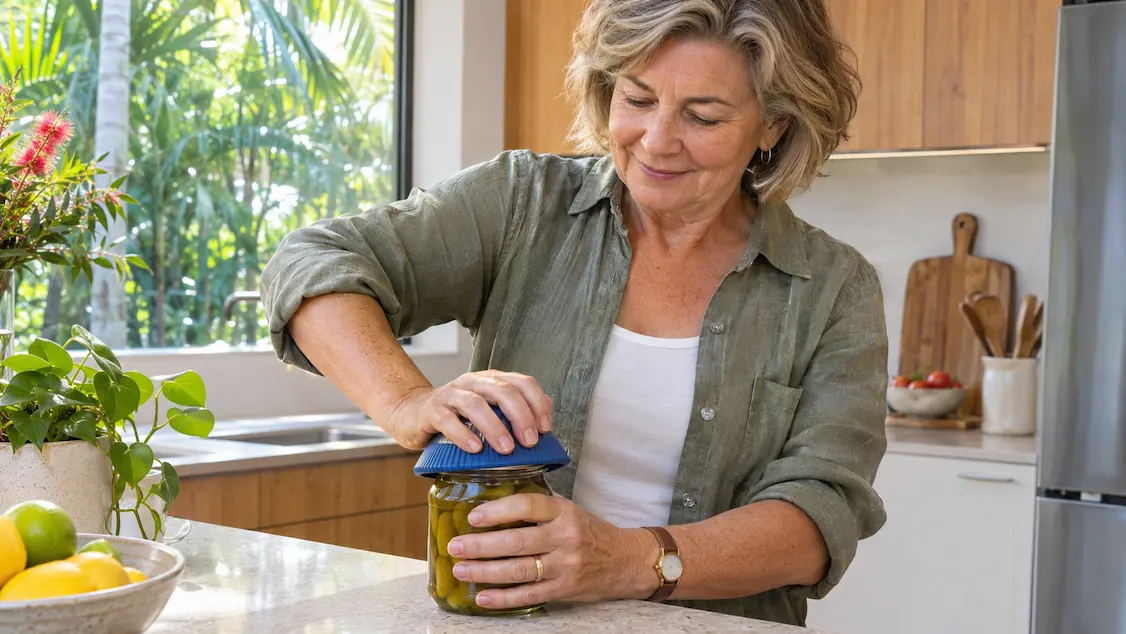
A stubborn jar lid can reveal how much work the thumb does. The same can happen with a house key, a clothes peg or a full kettle: a small joint at the base of the thumb suddenly makes an ordinary task hurt.
This is a common pattern in thumb base osteoarthritis. It can weaken pinch and grip, but an arthritic-looking X-ray does not decide how painful the hand will be or what treatment it needs.
The thumb meets the wrist at the first carpometacarpal joint, often shortened to the CMC joint. Its saddle shape lets the thumb move across the palm, rotate and press against the fingers. That range is what makes a strong pinch possible.
In thumb base osteoarthritis, the joint changes over time. The smooth cartilage covering the bone can thin, the joint may become less stable and new bone can form around its edges. These changes become more common with age and are seen more often in women.
Pain usually sits deep where the thumb meets the wrist. Pinching a key, turning a tap or opening a jar can bring it on. Some people notice stiffness, weakness, a grinding feeling or a more square-looking thumb base.
Pain on the thumb side of the wrist is not always arthritis. De Quervain tenosynovitis affects two nearby tendons. Trigger thumb causes catching, while carpal tunnel syndrome more often causes tingling or numbness. The location and pattern matter.
A GP can often make the diagnosis from the story and examination. An X-ray can confirm joint changes or help exclude another problem, especially after injury or before a surgical opinion. It is not always needed at the start.
The picture and the person do not always match. One hand can look quite arthritic and cause little trouble; another can be painful despite less striking changes. Treatment should follow pain, function and the tasks that matter, not the X-ray grade alone.
The 2025 British hand-surgery guideline recommends starting with supported self-management. This combines an explanation of the condition with exercise, task changes, pacing and ways to manage painful flares. A hand therapist—an occupational therapist or physiotherapist with hand expertise—can tailor this to work, hobbies and household tasks.
Small changes can reduce the force through the joint without abandoning hand use. A wide-handled utensil needs less pinch than a narrow one. A jar opener, key turner or two-handed lift can spread the load. Short breaks can be more useful than pushing through a long task and then resting the hand for days.
Exercises usually aim to maintain movement and improve the muscles that steady the thumb. They should fit the hand rather than follow a generic strengthening plan. A painful flare after every session is a reason to adjust the dose, not proof that the joint is being damaged.
A thumb-base splint can support the joint during painful tasks. Some are soft and flexible; others are firmer. No single design or wearing schedule suits everyone, and a splint should not be the only treatment.
An Australian trial followed 204 people with symptomatic, X-ray-confirmed thumb base osteoarthritis. Half received education alone. The others also received a splint, hand exercises and topical anti-inflammatory gel.
At six weeks, the combined programme produced a small to moderate improvement in hand function, but pain was not clearly better than with education alone. By 12 weeks the pain difference favoured the combined programme, although the average extra improvement was less than nine points on a 100-point scale. Skin reactions and exercise-related pain flares accounted for most of the 34 non-serious adverse events.
That result is useful but modest. A splint and exercise programme may make daily tasks easier; it does not rebuild cartilage or guarantee a pain-free thumb.
Topical anti-inflammatory gel may help some people and usually exposes the body to less medicine than a tablet. It can still irritate the skin and may not be suitable with some health conditions or medicines. A GP or pharmacist can help weigh those issues. Oral anti-inflammatory medicines carry wider stomach, kidney, heart and bleeding risks, particularly with age.
When self-management and a splint have not provided enough relief, a cortisone injection into the joint can be considered. The British guideline found low to moderate quality evidence for short-term improvement in pain and function, commonly over weeks to a few months.
An injection does not reverse the arthritis. Pain can flare briefly afterwards, skin colour or tissue can change at the injection site, blood glucose can rise temporarily in people with diabetes, and infection is rare. The likely benefit, risks and next step if it does not help should be clear before the procedure.
Surgery becomes a reasonable discussion when pain and loss of function remain substantial after a proper trial of non-surgical care. NSW Health referral criteria also expect hand therapy to have been tried before routine specialist referral for moderate or severe thumb CMC osteoarthritis.
The most established operation removes the small trapezium bone at the base of the thumb, a procedure called trapeziectomy. Surgeons may add ligament reconstruction, tendon tissue or another stabilising step. A 2026 Cochrane review found no trials comparing surgery with non-surgical care and only low- or very low-certainty evidence when different operations were compared. Adding ligament reconstruction and tendon interposition may make little or no difference to pain or function compared with trapeziectomy alone.
Recovery is measured in months rather than days. Surgery can reduce pain for selected people, but it brings risks such as infection, nerve irritation, stiffness, persistent pain and a long period of rehabilitation. The decision depends on how much the thumb limits life and whether those trade-offs are acceptable.
Pain after a fall, a deformed hand, rapidly worsening function, marked numbness or weakness, or a hot red swollen joint needs prompt assessment. Sudden swelling can also come from gout, infection or inflammatory arthritis rather than ordinary osteoarthritis.
For the person facing the stubborn jar, the aim is not to make every X-ray change disappear. It is to make the hand useful again. A well-fitted support, stronger hand, wider grip and sensible treatment ladder can often do more than the scan suggests.
New mothers are often surprised by where the aches of early parenthood turn up. For a good number it is not the back. It is the wrist, on the thumb s...
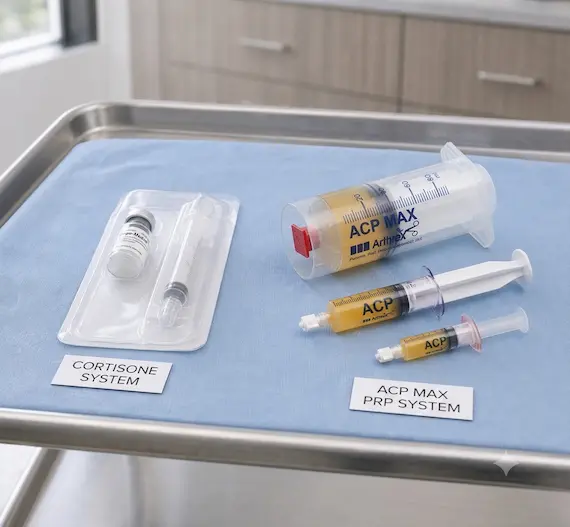
People with knee osteoarthritis who are offered an injection usually end up weighing two options: cortisone or PRP. Friends swear by one or the other...

The first clue often appears halfway through netball or football training. A young athlete points to a sore bump just below the kneecap. Running, jum...
Ready for a clearer plan for your back or musculoskeletal pain?
Your assessment focuses on understanding the likely source of your pain and the most appropriate non-surgical options for your diagnosis, with the aim of reducing pain and improving function.
You must have your own regular GP before booking. This service works alongside your GP for focused care. Booking requirements.
Book an appointment