
Knee Osteoarthritis Flare Plan: What to Do When Pain Spikes
Knee osteoarthritis symptoms often fluctuate. A painful flare can feel like something has suddenly gone wrong, but flares are common and do not alway...

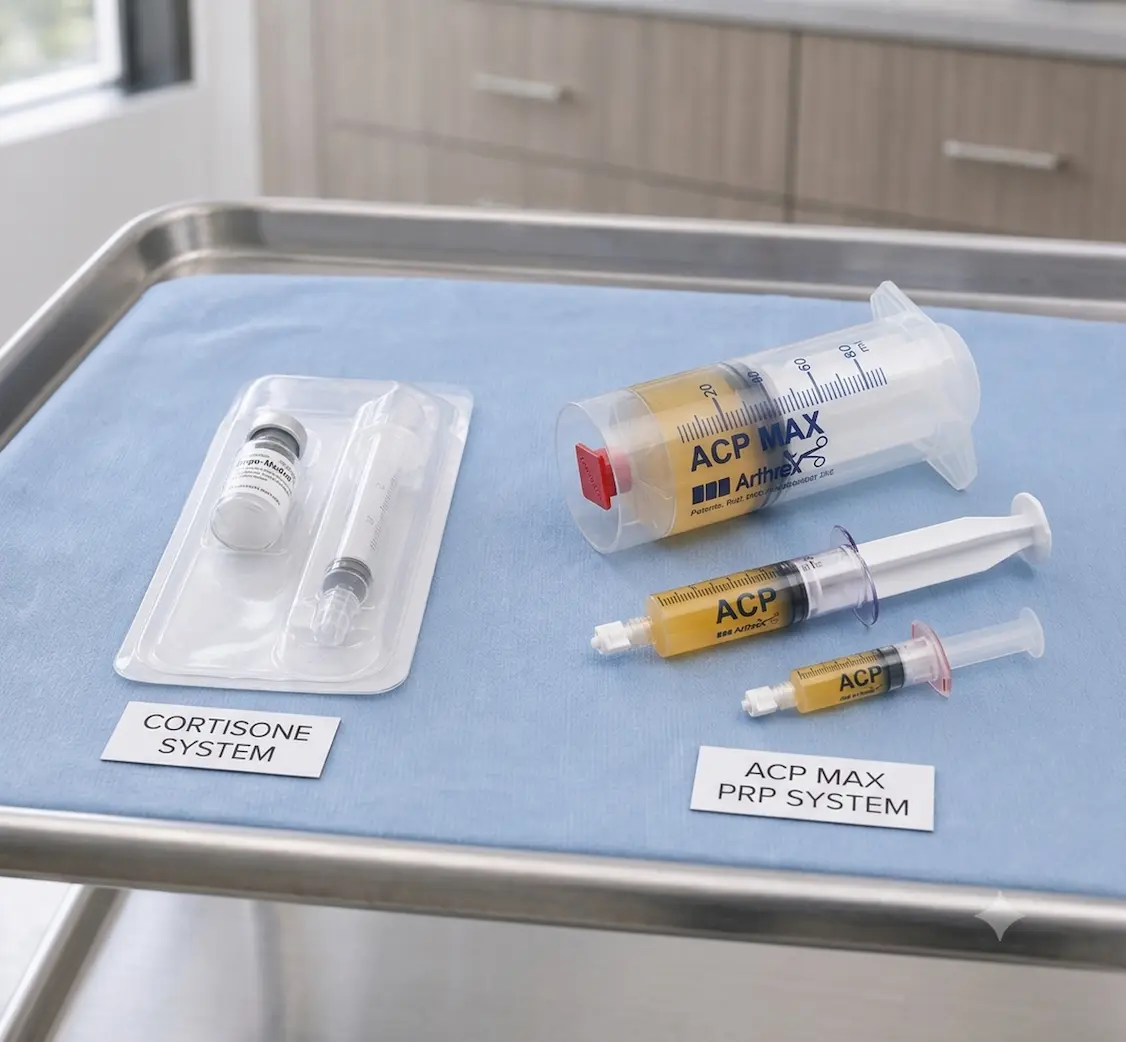
If you have knee osteoarthritis and have been offered an injection, you may be weighing up cortisone against PRP (platelet-rich plasma). They are very different treatments, and the honest answer is that neither is a cure — but they have different roles, and the evidence for each is worth understanding.
Cortisone (corticosteroid) is a potent anti-inflammatory. Injected into the knee, it can reduce inflammation and provide pain relief, often within days. The relief is typically shorter-term — weeks to a few months — and the effect tends to diminish with repeated use.
PRP involves concentrating the platelets from a small sample of your own blood and injecting that preparation into the joint. The rationale is to deliver growth factors that may influence the joint environment. Any benefit tends to develop more gradually than cortisone, over weeks. You can read more on our PRP page.
For cortisone, trials show it can help pain in the short term, but the benefit is modest and not long-lasting, and there is no evidence it changes the underlying course of the arthritis. One notable randomised trial of repeated cortisone injections over two years found no benefit over saline for pain and raised questions about cartilage. It remains a reasonable option for short-term flare relief in selected people.
For PRP, the picture is genuinely mixed. Some randomised trials and meta-analyses suggest PRP may improve pain and function compared with placebo or with hyaluronic acid in knee osteoarthritis, and it is one of the better-studied indications for PRP. However, other high-quality trials — including a large Australian randomised trial — found no significant benefit over placebo for symptoms or cartilage. The variation in how PRP is prepared between studies makes it hard to draw firm conclusions.
There is no single winner, and the honest position is that it depends on what you are trying to achieve:
Crucially, neither injection replaces the foundations of knee osteoarthritis management, which have the strongest evidence of all: keeping the muscles around the knee strong, staying active, and managing weight. Injections are an adjunct, not a substitute. You can read more on our knee osteoarthritis page.
Cortisone and PRP work differently, suit different goals, and have different evidence behind them. The right choice — if any injection is right at all — depends on your knee, your previous treatment and your priorities. We are happy to talk through the realistic expected benefit, the evidence and the costs so you can make an informed decision.
Knee osteoarthritis symptoms often fluctuate. A painful flare can feel like something has suddenly gone wrong, but flares are common and do not alway...

Cortisone injections are commonly used for musculoskeletal pain. They can be very helpful in the right setting, but they are often misunderstood.Co...

The knee joint is a complex structure designed to facilitate movement while minimizing friction. It comprises bones covered with a thin layer of smoo...
Ready for a clearer plan for your back or musculoskeletal pain?
Your assessment focuses on understanding the likely source of your pain and the most appropriate non-surgical options for your diagnosis, with the aim of reducing pain and improving function.
Book an appointment