
De Quervain Tenosynovitis: What Helps Thumb-Side Wrist Pain?
New mothers are often surprised by where the aches of early parenthood turn up. For a good number it is not the back. It is the wrist, on the thumb s...
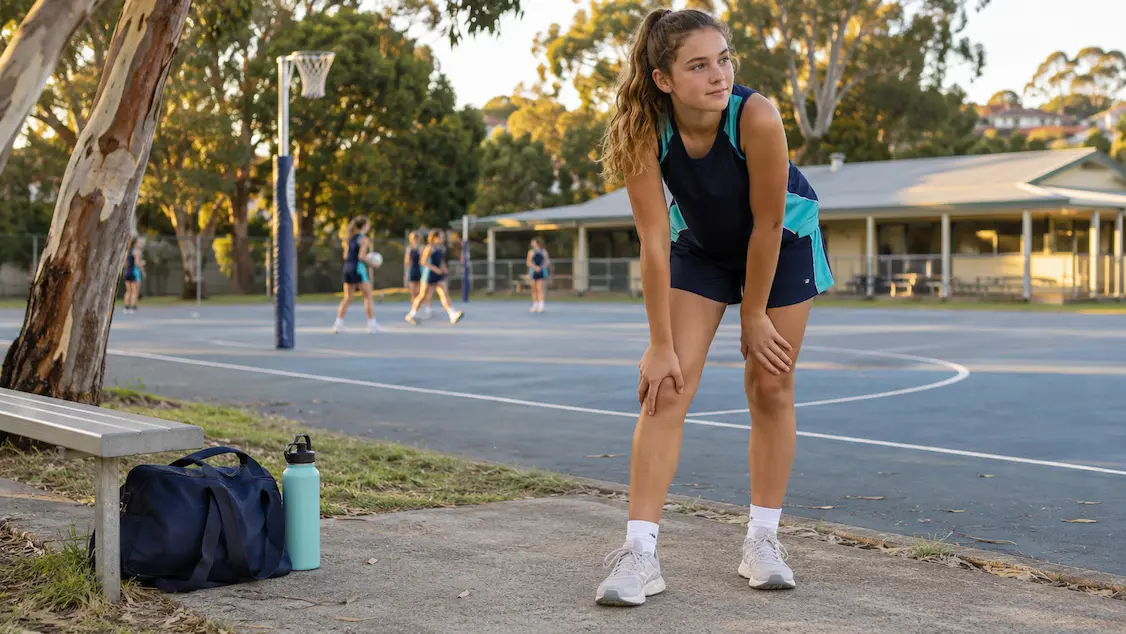
The first clue often appears halfway through netball or football training. A young athlete points to a sore bump just below the kneecap. Running, jumping and kicking hurt, and kneeling on the floor is suddenly awkward.
Families are often told that Osgood-Schlatter disease will disappear with growth. It usually does settle, but the timetable can be long. The athlete may still be able to train if the amount and intensity are adjusted.
Osgood-Schlatter disease affects the growth area at the top of the shin bone, where the patellar tendon attaches below the kneecap. Doctors call this area the tibial tubercle. It is softer than mature bone while a child is growing.
The thigh muscles pull through the kneecap and patellar tendon each time the knee straightens. Repeated sprinting, jumping and kicking place more load on the tibial tubercle. During a growth spurt, that pull can make the area sore and prominent.
This differs from an acute knee injury. The pain usually builds over days or weeks and sits in one precise spot. There may be a firm bump, tenderness and a limp after sport. One or both knees can be affected.
Sydney Children’s Hospitals Network says it is most common from 10 to 14 years of age, especially in sports such as soccer, rugby, AFL, basketball, netball, tennis, ballet and running.
Australia does not have a good national prevalence figure. A study of 956 school students aged 12 to 15 in Brazil found the condition in 9.8 per cent, close to one in ten. Regular sport was associated with the diagnosis, although that type of study cannot show that sport alone caused it.
Training load often rises at the same time as the body is growing. A player may add club sessions, school sport and weekend games without any single session looking excessive. The combined week is what matters.
There is no fixed answer for every child. Mild pain that settles quickly may allow some training to continue. A limp, pain during ordinary walking, or symptoms that remain worse the next day are signs that the current load is too high.
The first change is usually to reduce the activities that provoke the most pain. That may mean fewer jumps at netball training, less sprinting at football, shorter sessions or a temporary break from competition. Swimming, easy cycling or another comfortable activity can help maintain fitness.
Perth Children’s Hospital advises limiting running, jumping and kicking until these can be managed without pain. It does not recommend immobilising the knee. Sydney Children’s Hospitals Network notes that severe cases may need one or two seasons away from the aggravating sport.
A written plan shared with the family, school and coach can prevent the athlete from repeatedly testing the knee at full pace. The plan should change as symptoms and function improve.
A physiotherapist can help match exercise to the stage of pain. Early work may use controlled knee-strengthening exercises that do not provoke a lasting flare. Squats, step-ups, running and jumping can then return in stages as the knee tolerates more load. Gentle thigh stretching may help some athletes.
Ice after activity or a soft knee pad can make the area more comfortable. Pain relief should be discussed with a GP or pharmacist who knows the child’s health. These measures can ease symptoms, but they do not make the growth plate mature faster.
A Danish study followed 51 adolescents through a 12-week programme of activity changes, pain monitoring, strengthening and gradual return to sport. At 12 weeks, 80 per cent said they had improved, yet only 16 per cent had returned to sport. By one year, 90 per cent reported improvement and 69 per cent were playing sport again.
There was no comparison group. The study cannot separate the effect of the programme from recovery over time, and the participants had already been sore for an average of 21 months. It does show that progress in pain and a full return to sport can move at different speeds.
A cortisone injection is not part of routine care around an open growth plate. Surgery is rarely considered during adolescence. It is reserved for selected adults with persistent symptoms after growth has finished and an unresolved bony fragment.
Most cases are diagnosed from the story and examination. An X-ray does not need to confirm a typical case. It becomes useful when the location, age or pattern does not fit, or when the clinician needs to exclude another cause.
Sudden pain after an injury, inability to bear weight, pain that wakes the child at night, fever, a hot or markedly swollen knee, or pain away from the tibial tubercle needs medical assessment. Perth Children’s Hospital advises urgent review when injury, infection or a tumour is suspected.
Persistent pain also deserves follow-up. In a two-year study of the same Danish group, 17 of 46 adolescents still had Osgood-Schlatter pain and more than one in five had stopped sport because of knee pain. That small study involved young people with long-standing symptoms, so it should not be used to predict one child’s future. It does challenge the idea that every case fades quickly without a plan.
The athlete at the side of the court does not need a race against the calendar. Full training can return in steps as everyday activity, strength, running and jumping become comfortable again.
The bump may remain after growth ends, especially when kneeling. For most young people the pain settles. Symptoms and function set the timetable, and a gradual build gives the knee and the athlete time to catch up.
New mothers are often surprised by where the aches of early parenthood turn up. For a good number it is not the back. It is the wrist, on the thumb s...
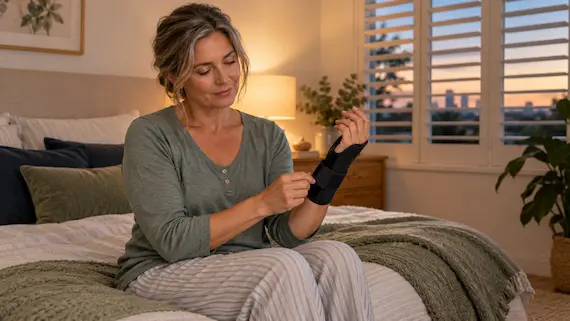
It often starts at three in the morning. A hand goes numb and tingly, the thumb and first two fingers feel as though they belong to someone else, and...

It usually shows up first thing in the morning. A finger curls into the palm and stays there, then flicks straight with a painful click, or needs the...
Ready for a clearer plan for your back or musculoskeletal pain?
Your assessment focuses on understanding the likely source of your pain and the most appropriate non-surgical options for your diagnosis, with the aim of reducing pain and improving function.
You must have your own regular GP before booking. This service works alongside your GP for focused care. Booking requirements.
Book an appointment