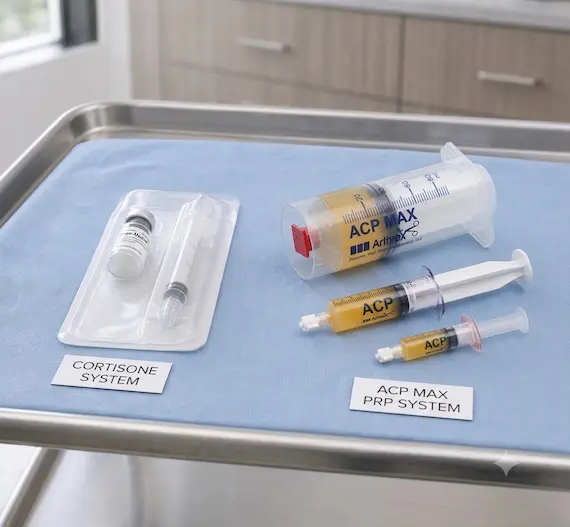
Cortisone vs PRP for Knee Osteoarthritis: What the Evidence Says
If you have knee osteoarthritis and have been offered an injection, you may be weighing up cortisone against PRP (platelet-rich plasma). They...

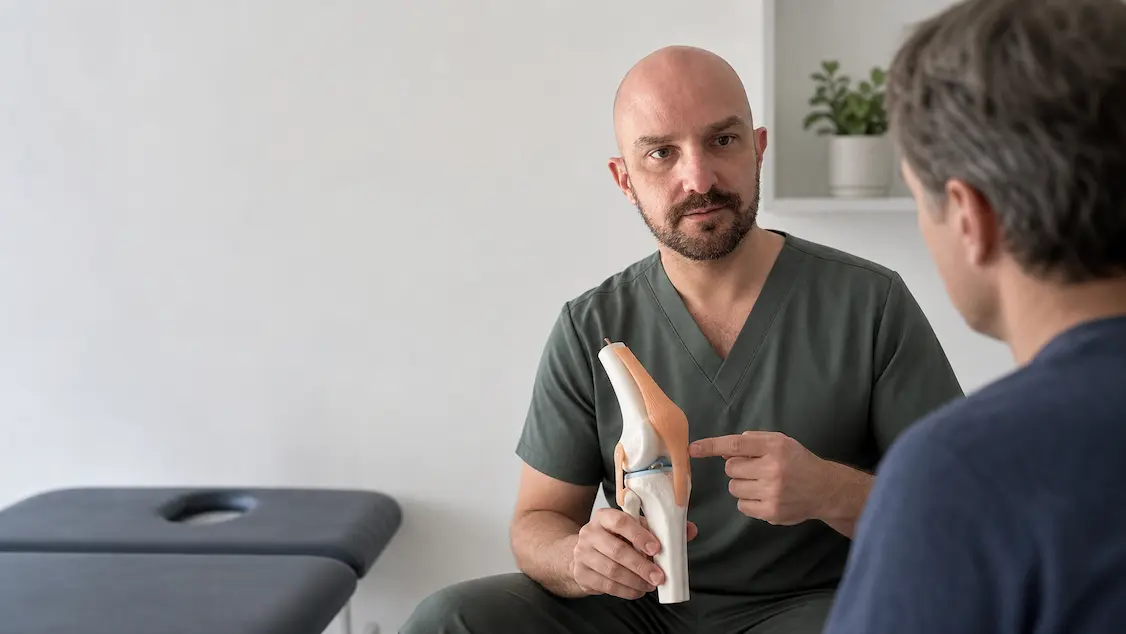
A meniscus tear does not automatically mean you need surgery. For many adults—particularly when symptoms developed gradually and the knee is not truly locked—education, activity changes and progressive exercise are reasonable first steps. Surgery can still be appropriate in selected situations, so the injury story and examination matter more than the scan wording alone.
This article provides general information. A new traumatic knee injury, a knee that cannot fully straighten, or severe and worsening symptoms needs an individual assessment.
Each knee has two menisci: firm, flexible pads of cartilage that help distribute load between the thigh bone and shin bone. A tear can follow a twisting injury, or it can develop gradually as the tissue changes with age.
That distinction matters. A displaced tear after a significant injury is different from a degenerative tear found on an MRI in a middle-aged or older adult. Degenerative meniscal changes are common and may occur alongside knee osteoarthritis. A scan can identify a tear, but it cannot prove that the tear is the only cause of pain.
Symptoms may include pain along the knee joint line, swelling after activity, pain with twisting or deep bending, clicking, catching or reduced confidence in the knee. These features overlap with other knee problems, so no single symptom confirms the diagnosis.
Several randomised trials have compared arthroscopic partial meniscectomy—removing the torn portion of the meniscus—with structured exercise-based care.
In the ESCAPE trial, adults aged 45 to 70 with degenerative meniscal tears improved with both approaches. At five years, exercise-based physiotherapy remained non-inferior to surgery for patient-reported knee function. The trial excluded people with a locked knee and some other major knee problems, so its findings should not be applied to every tear.
The placebo-controlled FIDELITY trial found no relevant patient-reported benefit from partial meniscectomy over placebo surgery at five years for selected adults with degenerative medial meniscus tears. It also found a slightly greater risk of radiographic osteoarthritis progression after meniscectomy, although the estimate had uncertainty.
Evidence in younger adults also supports considering rehabilitation first. In the DREAM trial of active adults aged 18 to 40, early surgery was not superior to 12 weeks of exercise and education at one year. About one in four people allocated to exercise later chose surgery. That is an important nuance: starting without surgery does not mean surgery is permanently ruled out.
The aim is to settle an irritable knee while rebuilding its ability to handle walking, stairs, work and sport. A plan may include:
The exercise dose should match the person and the stage of recovery. Some discomfort during rehabilitation can be acceptable, but a marked increase in swelling, loss of movement or a flare that does not settle deserves review.
You can read more about the condition on our meniscus-related knee pain page. If osteoarthritis is part of the picture, our knee osteoarthritis flare plan explains how to reduce a symptom spike without defaulting to complete rest.
Surgery is not “never” the answer. Prompt assessment is important when the knee is truly locked—meaning it is physically blocked from fully straightening or bending—rather than simply stiff or painful. A large displaced tear, a repairable tear after acute trauma, associated ligament injury, or ongoing substantial symptoms despite a well-delivered rehabilitation programme may also justify an orthopaedic opinion.
The type of procedure matters too. When surgery is appropriate, repairing and preserving the meniscus may be considered in suitable tears rather than removing tissue. Whether a tear can be repaired depends on its location, pattern, blood supply, timing and the condition of the rest of the knee.
Clicking or occasional catching alone does not prove that surgery will improve pain or function. The decision should bring together the mechanism of injury, examination findings, imaging where it will change management, rehabilitation already attempted, and the person’s priorities.
Arrange prompt medical assessment after a knee injury if you cannot bear weight, the knee is grossly swollen or deformed, it repeatedly gives way, or you cannot fully straighten it. Fever, a hot red joint, feeling very unwell, or severe escalating pain needs urgent care.
It is also sensible to be reviewed if pain and swelling are not improving, normal activity remains substantially limited, or the diagnosis is unclear. An MRI is not automatic for every sore knee, but it may be useful when the result is likely to change treatment or surgical planning.
Many meniscal tears can begin with a well-structured exercise and education plan rather than immediate surgery. This is especially well supported for degenerative, non-locking tears, but it is not a rule for every knee. Acute trauma, true locking and persistent major limitations change the conversation. The most useful next step is an assessment that matches the scan—if one is needed—to the symptoms, function and goals of the person.
If you have knee osteoarthritis and have been offered an injection, you may be weighing up cortisone against PRP (platelet-rich plasma). They...

Knee osteoarthritis symptoms often fluctuate. A painful flare can feel like something has suddenly gone wrong, but flares are common and do not alway...
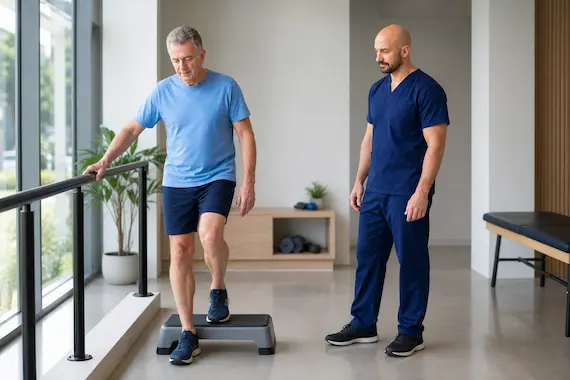
The knee joint is a complex structure designed to facilitate movement while minimizing friction. It comprises bones covered with a thin layer of smoo...
Ready for a clearer plan for your back or musculoskeletal pain?
Your assessment focuses on understanding the likely source of your pain and the most appropriate non-surgical options for your diagnosis, with the aim of reducing pain and improving function.
Book an appointment