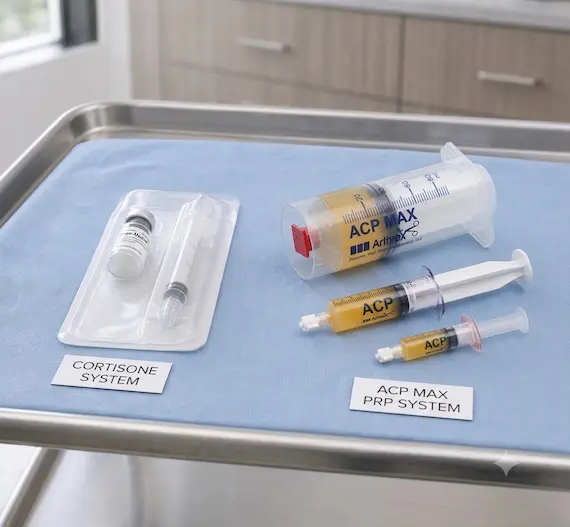
Cortisone vs PRP for Knee Osteoarthritis: What the Evidence Says
If you have knee osteoarthritis and have been offered an injection, you may be weighing up cortisone against PRP (platelet-rich plasma). They...

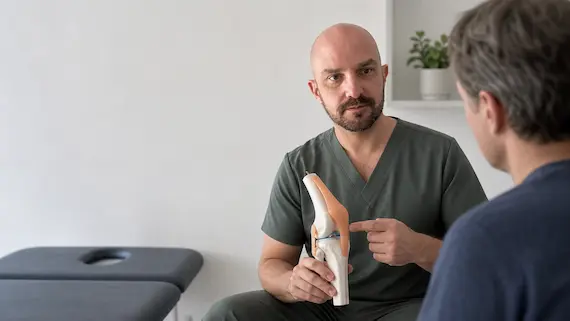
The knee joint is a complex structure designed to facilitate movement while minimizing friction. It comprises bones covered with a thin layer of smooth cartilage that reduces friction during motion. Additionally, the knee contains the meniscus, a wedge-shaped cartilage that acts as a cushion and stabilizer for the joint. Four major ligaments support the knee, while synovial fluid, a natural lubricant, further decreases friction within the joint.
Full clinical guide: Knee osteoarthritis — assessment and non-surgical management. This article is a short overview; the condition guide covers diagnosis, imaging and the treatment evidence in detail.
Osteoarthritis (OA) of the knee involves progressive degeneration of joint cartilage and underlying bone. This condition is often exacerbated by previous injuries to the knee ligaments or meniscus. Modifiable risk factors such as obesity and smoking can accelerate the progression of OA. The disease is characterized by the breakdown of cartilage, leading to bone-on-bone contact, increased inflammation, and abnormal bone changes beneath the cartilage (McAlindon et al., 2017).
Current management of knee OA includes various treatment options, though their effectiveness and safety vary:
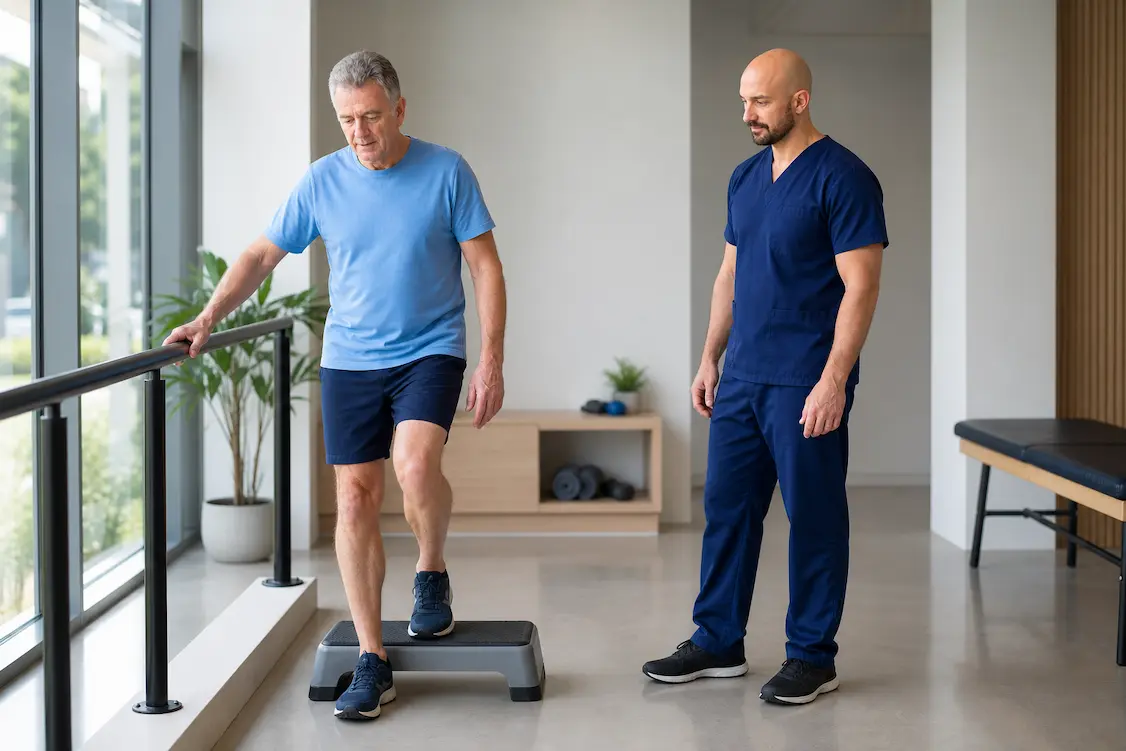
Physical therapy and exercise play a crucial role in managing knee OA. Exercise helps maintain muscle strength around the knee, which can alleviate pain and improve function. Water-based exercises or cycling are often recommended to minimize joint strain. Additionally, weight loss can be beneficial not only through reduced mechanical stress on the knee but also by lowering systemic inflammation (Messier et al., 2018).
Hyaluronic acid injections, such as Synvisc and Durolane, have been used to reduce pain in mild to moderate knee OA. These injections can provide relief for up to 4-6 months in about 50% of patients, although they may be ineffective for others (Colen et al., 2020).
Cortisone injections offer short-term relief by reducing inflammation in the knee. They typically provide benefit for 3-4 weeks but do not alter long-term disease progression. Repeated use of cortisone injections is associated with concerns about accelerating cartilage loss (McAlindon et al., 2017). Recent studies also suggest that cortisone injections may increase the risk of post-operative infection if administered close to knee replacement surgery (Siemieniuk et al., 2017).
Regenerative therapies such as Platelet Rich Plasma (PRP) and Glucose Prolotherapy aim to stimulate healing in the knee joint. PRP injections, which involve using components from the patient’s own blood, have been shown to improve pain and function significantly. Similarly, Glucose Prolotherapy has demonstrated superior pain relief compared to exercise or saline injections (Topol et al., 2016; Rabago et al., 2013). PRP is often preferred due to its potentially greater efficacy and fewer required treatments compared to Prolotherapy.
Arthroscopic surgery for knee OA has been extensively studied. Recent research shows that arthroscopy generally does not offer significant long-term benefits for patients with degenerative knee conditions, though it may be helpful for mechanical symptoms such as locking (Thorlund et al., 2015; Khan et al., 2014). Current guidelines recommend against routine arthroscopy for knee pain in patients over 35 years old (Siemieniuk et al., 2017).
Total knee replacement (TKR) can be a transformative intervention for severe knee OA, providing substantial improvement in quality of life. However, it is considered a last-resort option and requires a significant commitment to post-operative rehabilitation. Timing of the surgery is crucial, as early intervention may not yield significant benefits for patients with less severe symptoms (Dakin et al., 2015).
If you have knee osteoarthritis and have been offered an injection, you may be weighing up cortisone against PRP (platelet-rich plasma). They...

Knee osteoarthritis symptoms often fluctuate. A painful flare can feel like something has suddenly gone wrong, but flares are common and do not alway...
A meniscus tear does not automatically mean you need surgery. For many adults—particularly when symptoms developed gradually and the knee is not trul...
Ready for a clearer plan for your back or musculoskeletal pain?
Your assessment focuses on understanding the likely source of your pain and the most appropriate non-surgical options for your diagnosis, with the aim of reducing pain and improving function.
Book an appointment