
Morning Back Stiffness: Could It Be Inflammatory?
Morning back stiffness is common and does not, by itself, mean you have inflammatory arthritis. Sleep position, a change in activity, an ordinary...
Back pain is a prevalent and complex condition affecting millions globally, with significant personal, societal, and economic impacts (Hartvigsen et al., 2018). The interplay between biomechanics, degenerative changes, and the role of specific joints like the sacroiliac joint (SIJ) contributes to the complexity of diagnosing and treating back pain. Some injection therapies, including prolotherapy and platelet-rich plasma (PRP), are being studied for selected persistent pain presentations, but their evidence differs substantially by diagnosis.
Full clinical guide: Low back pain — assessment and non-surgical management. This article is a short overview of the biomechanics; the condition guide covers diagnosis, red flags, imaging and treatment.
Abstract
Back pain is a leading cause of disability worldwide, with significant impacts on quality of life and healthcare costs. This article explores the biomechanics of back pain, its underlying causes, the role of the sacroiliac joint (SIJ), and emerging treatments such as prolotherapy and platelet-rich plasma (PRP). Understanding these elements is crucial for effective diagnosis and management of back pain.
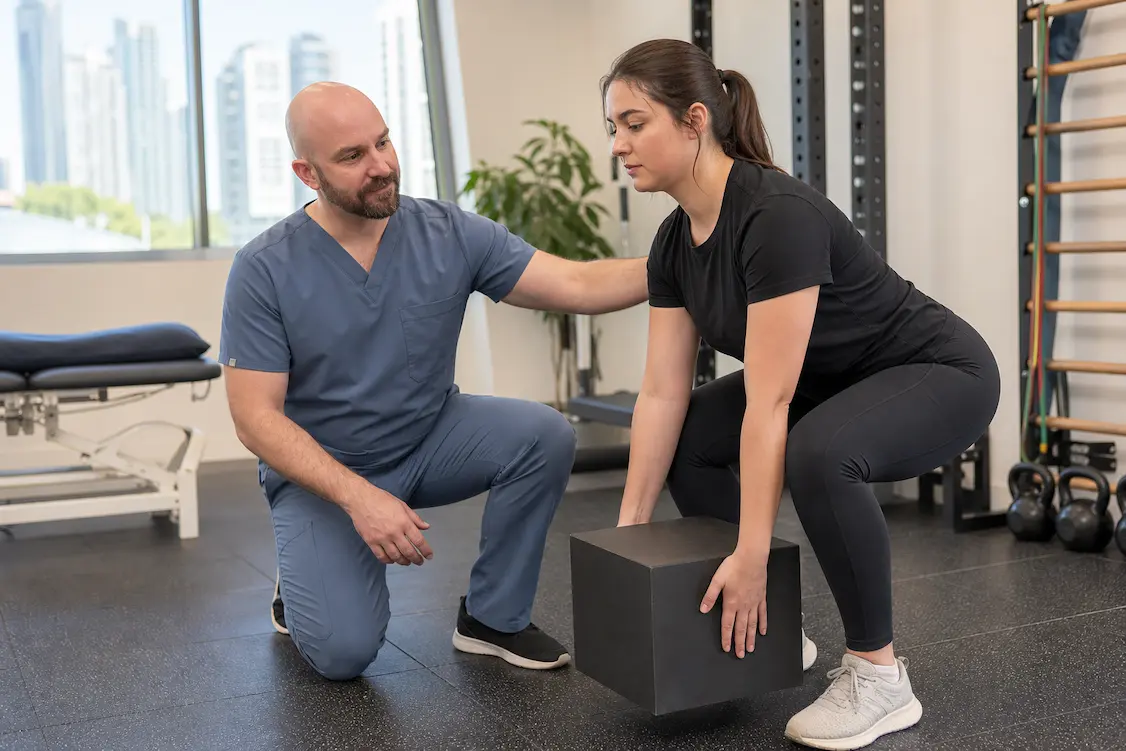
The lumbar spine, responsible for supporting much of the body’s weight, is a common site of pain due to biomechanical stresses. Factors like poor posture, repetitive movements, and improper lifting can lead to mechanical overload, causing degeneration of spinal structures, such as intervertebral discs and facet joints (Maher et al., 2017). Understanding these biomechanical factors is essential in diagnosing and addressing the root causes of back pain.
Back pain can arise from various sources, including mechanical stress, degenerative processes, and inflammatory conditions. Mechanical causes often involve muscle strains and ligament sprains, typically resulting from poor body mechanics (Deyo & Mirza, 2016). Degenerative causes, such as disc herniation and osteoarthritis, become more prevalent with age and contribute significantly to chronic pain (Brinjikji et al., 2015). Additionally, inflammatory conditions like ankylosing spondylitis can cause persistent and severe pain (Sieper et al., 2017).
The SIJ is an important potential source of lower-back and buttock pain. It plays a key role in load transfer between the spine and lower extremities, and pain may follow trauma, pregnancy, degenerative change or lumbar fusion (Vleeming et al., 2012). The diagnosis is challenging because SIJ symptoms overlap with lumbar spine, hip, gluteal tendon and nerve conditions. Current consensus guidance favours a whole-clinical-picture approach, using a cluster of pain-provocation tests to guide suspicion rather than relying on a single test or scan. Imaging is especially helpful to exclude inflammatory, infectious, malignant or other structural causes; selected image-guided local-anaesthetic injections may help clarify the diagnosis when the result will change management (Cohen et al., 2025).
Traditional treatments for back pain include physical therapy, medications, and injections. However, regenerative medicine approaches, such as prolotherapy and platelet-rich plasma (PRP) therapy, have garnered attention for their potential in managing chronic pain.
Prolotherapy involves injecting a concentrated dextrose solution into or around selected painful structures. Its mechanism is not fully established. A small randomised trial in carefully selected SIJ pain reported longer-lasting relief than steroid injection, but further research is needed before it can be considered a standard SIJ treatment. It should not replace diagnosis or a targeted rehabilitation programme.
PRP therapy uses a preparation of concentrated platelets from a person’s own blood. It has more supportive evidence for some conditions, such as knee osteoarthritis and tennis elbow, than it does for axial pain. A 2025 SIJ-specific systematic review found only a small number of randomised and observational studies and graded the evidence limited, with a weak recommendation (Manchikanti et al., 2025). It may be discussed for a carefully diagnosed, persistent SIJ presentation, but it is not a first-line treatment or a substitute for rehabilitation.
Back pain is a multifactorial condition that requires a comprehensive understanding of its biomechanics, causes, and potential treatment options. The SIJ deserves consideration in the right clinical pattern, but it should not be assumed to be the culprit on the basis of location alone. Targeted rehabilitation remains the foundation of care; regenerative injections are selective options with important evidence limits.
Morning back stiffness is common and does not, by itself, mean you have inflammatory arthritis. Sleep position, a change in activity, an ordinary...
Call triple zero (000) or go to the nearest emergency department now if back pain is accompanied by new loss of bladder or bowel control, diffi...
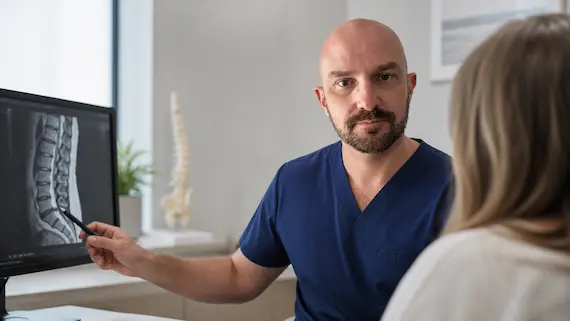
Short answer: for most people with new low back pain, no — an MRI is not needed, and getting one too early can do more harm than good. This surpr...
Ready for a clearer plan for your back or musculoskeletal pain?
Your assessment focuses on understanding the likely source of your pain and the most appropriate non-surgical options for your diagnosis, with the aim of reducing pain and improving function.
Book an appointment