Back Pain Doctor
V-ACTOR Vibration Therapy Brisbane
Written by Dr Joshua Hatch, Musculoskeletal GP, RACGP Fellow, Diploma in Musculoskeletal Medicine (FSEM UK).
What it can help with
- Tender, guarded muscle limiting movement after the acute phase has passed
- Myofascial tightness in the paraspinal, gluteal, calf or forearm muscles
- Muscular pain contributing to neck, back or hip symptoms
- Preparation before loading work, where muscle tone is the limiting factor
Suitability depends on your individual diagnosis and is assessed at consultation.
Why V-ACTOR is not shockwave
One console, two different treatments.
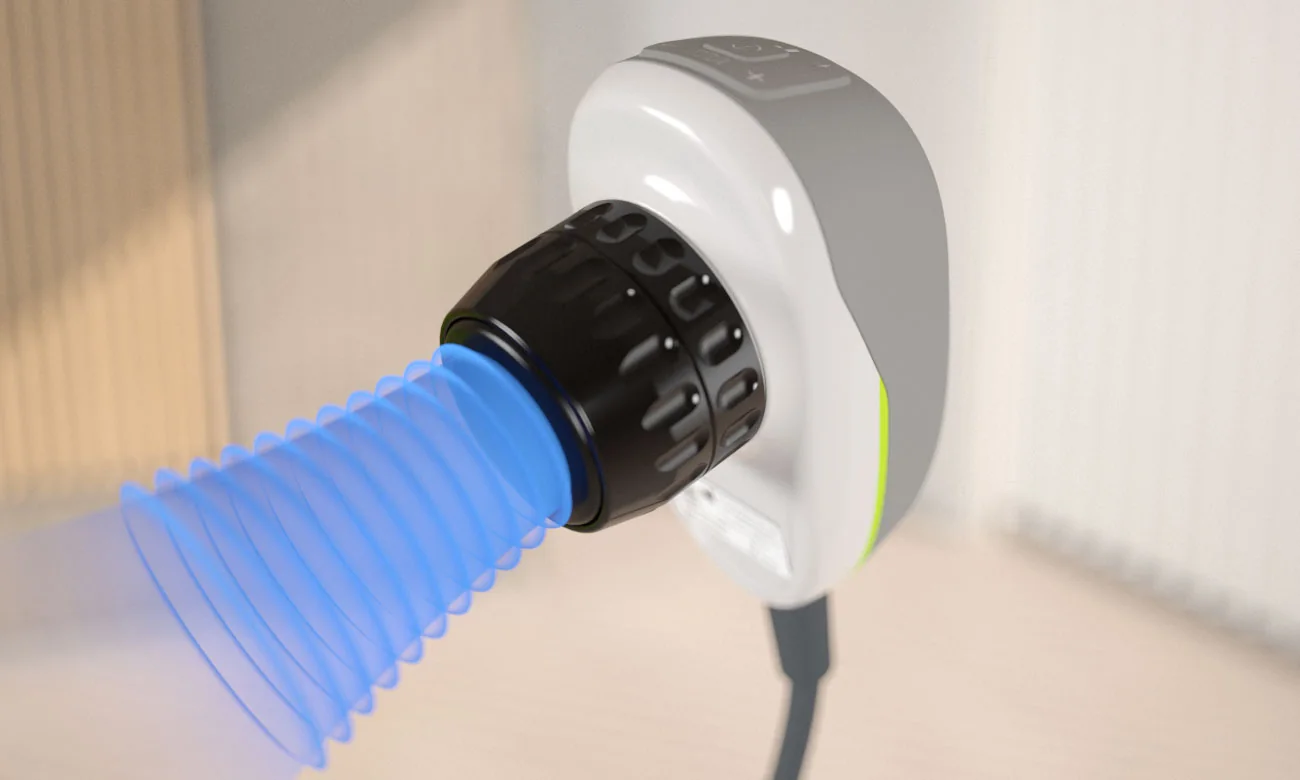
V-ACTOR and radial shockwave run from the same MASTERPULS icon console and are selected as separate modes, which is exactly why the two get confused. They are not the same treatment. Radial shockwave delivers a single high-amplitude pressure pulse intended to reach tendon and soft tissue; V-ACTOR delivers continuous oscillation at much lower energy over muscle and fascia, across a range of roughly 1 to 100 Hz. The evidence behind them is not comparable either — shockwave has a substantial trial base in tendinopathy, and vibration therapy does not.
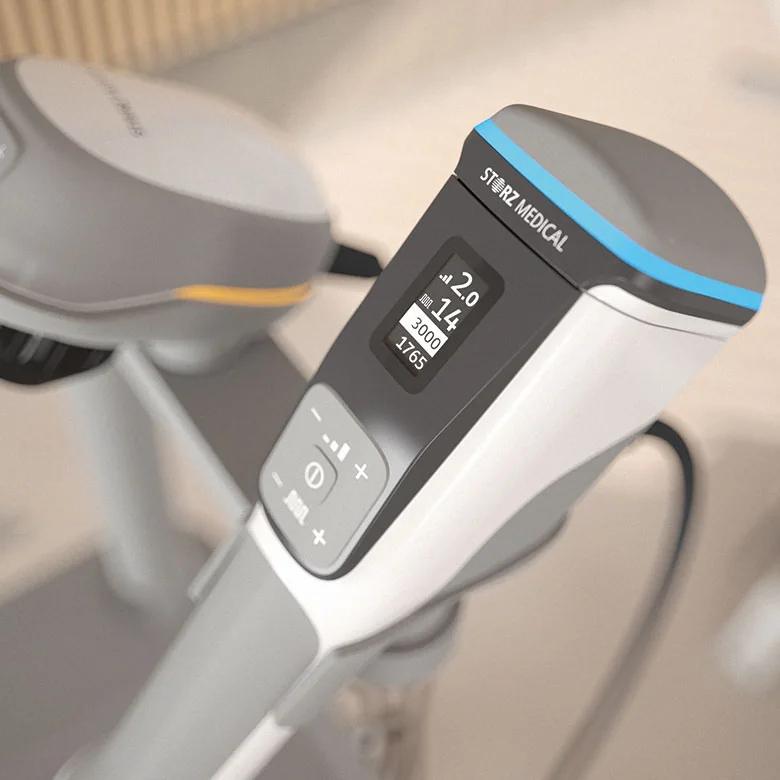
V-ACTOR vibration therapy is a short myofascial treatment used at our Brisbane clinic in Milton. It is delivered from the same STORZ Medical MASTERPULS icon system as our radial shockwave, using a separate handpiece and a different treatment mode.
It sits at stage two of our treatment pathway, alongside wet needling and trigger point injection — the point at which the aim is to settle pain and muscular guarding enough to get on with the rehabilitation that actually changes the longer-term course. It is not an energy-based treatment for tendon or joint pathology, and it is not a substitute for radial or focused shockwave.
We are deliberate about where this sits. The evidence for local vibration therapy is thin, and we would rather say so plainly than present it as more than it is. It is offered because it is low risk, quick, and occasionally useful for the muscular component of a problem — not because the literature supports it strongly.
How it works
The V-ACTOR handpiece delivers rapid mechanical oscillation through an applicator moved across the skin, over a frequency range of roughly 1 to 100 Hz. It is not a shockwave. A shockwave — radial or focused — is a single high-amplitude pressure pulse; a vibration handpiece delivers continuous oscillation at much lower energy. Sharing a console does not make them the same treatment, and we would rather be explicit about that than let the STORZ badge imply more than it should.
The frequency is chosen for what the muscle is doing. Lower frequencies are used to relax muscle and encourage local circulation. Higher frequencies are used more for pain modulation and sensory stimulation. These are reasonable physiological rationales rather than firmly established clinical protocols, and we would rather describe them that way.
The proposed effect is on muscle tone and local circulation, and on the short-term modulation of pain from tender muscle. That is plausible and consistent with what patients report in the room. It is not the same claim as changing the structure of a tendon or a joint, and we do not make that claim for it.
What the evidence shows
What to expect
Conditions reviewed for this treatment
There are no available studies of this treatment in any condition we see. The mechanism is plausible and it is reasonable to offer on that basis, but plausibility is not evidence, and listing conditions here would imply an indication the published literature does not support. It may still be offered as an adjunct alongside treatment that does have evidence, once that gap has been explained — never as the plan on its own.
Frequently asked questions
Is V-ACTOR the same as shockwave therapy?
What is the evidence for it?
Will it treat my tendinopathy or arthritis?
Does it hurt?
Is there an extra cost?
Ready for a clearer plan for your back or musculoskeletal pain?
Book an assessment with Dr Joshua Hatch.
Your assessment focuses on understanding the likely source of your pain and the most appropriate non-surgical options for your diagnosis, with the aim of reducing pain and improving function.
Book an appointment