Back Pain Doctor
Spine Anatomy: How Your Back Is Built
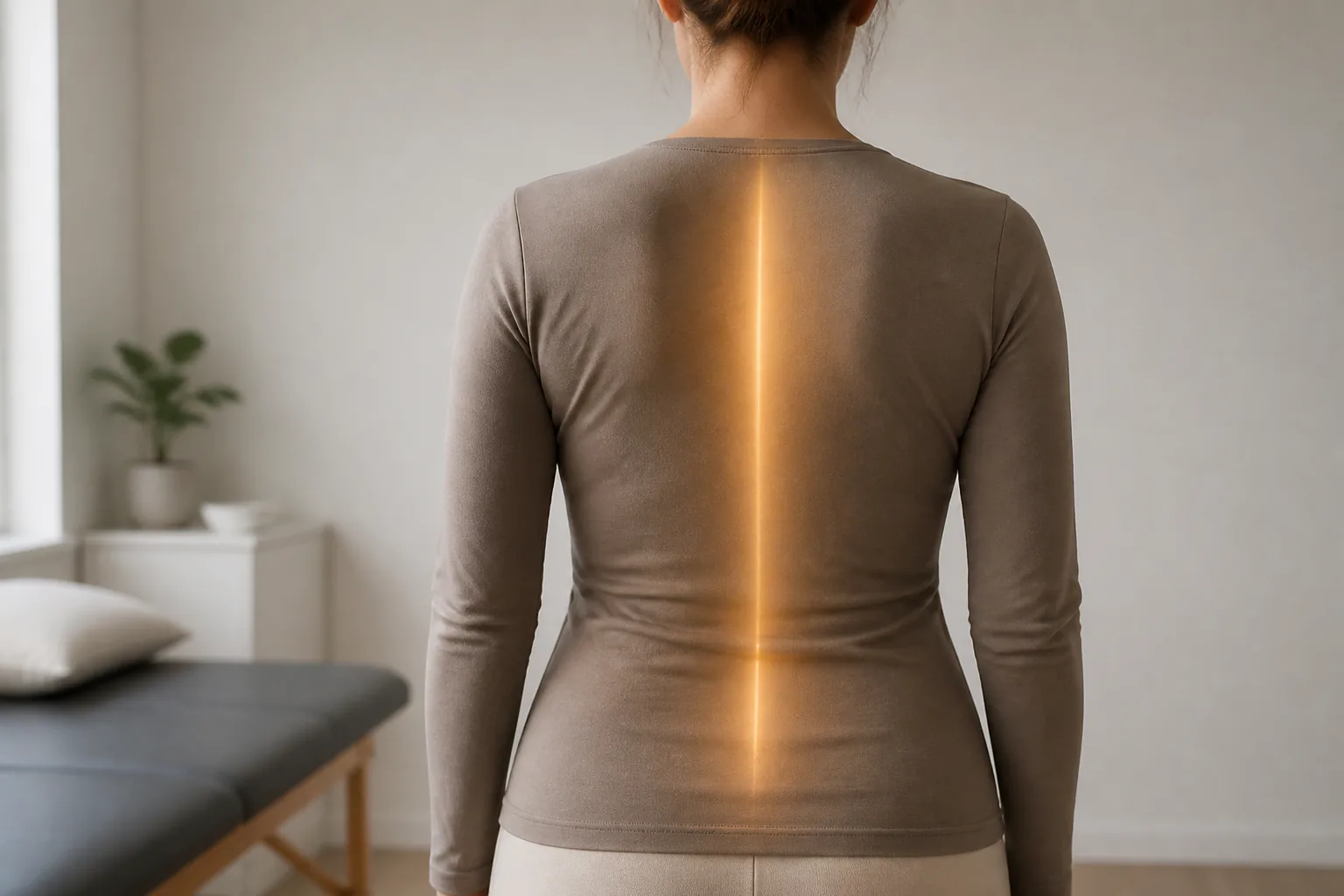
Written by Dr Joshua Hatch, Musculoskeletal GP, RACGP Fellow, Diploma in Musculoskeletal Medicine (FSEM UK).
Your spine holds up your head, shoulders and upper body, gives you the stability to stand upright and the flexibility to bend and twist, and protects the spinal cord. Viewed from the side it forms three gentle natural curves: the neck and lower back curve forward, called lordosis, while the chest curves the opposite way, called kyphosis. These curves are what allow balance and upright posture. When a curve becomes too large or too small, standing straight becomes harder — the changes described as spinal deformity, including excessive kyphosis, excessive lordosis, flatback and scoliosis.
The spinal cord runs from the skull down through the central canal, with nerves branching out through openings between the vertebrae to carry messages to and from the muscles. The cord itself ends around the first or second lumbar vertebra; below that the nerve roots continue as a bundle called the cauda equina, or horse’s tail. In the pelvis some of these join to form the sciatic nerve running down the leg. Between the vertebrae, discs act as shock absorbers, while small facet joints at the back of each segment guide movement and, like any joint, can develop arthritis and become a source of pain.
The practical value of knowing this is that it makes imaging reports less frightening. Disc bulges, facet arthritis and degenerative change are extremely common findings in people with no symptoms whatsoever, and their presence on a scan does not establish that they are causing your pain. Assessment therefore starts with the history and examination, and imaging is used to answer a specific question — particularly where red-flag features are present — rather than as a routine first step.
If you are here to understand a specific problem, the guides on low back pain, sciatica, lumbar disc herniation, lumbar spinal stenosis, neck pain and cauda equina syndrome go into more detail.
This page is general educational information and does not replace individual medical advice. Please speak with your GP about your own circumstances.
Other back conditions
Pain in the same area can come from more than one source, and the label matters less than what the examination and history point to. These are the other guides for this region.
Frequently asked questions
What are the parts of the spine?
What is a disc actually made of?
Why do scans show changes that do not match my pain?
Ready for a clearer plan for your back or musculoskeletal pain?
Book an assessment with Dr Joshua Hatch.
Your assessment focuses on understanding the likely source of your pain and the most appropriate non-surgical options for your diagnosis, with the aim of reducing pain and improving function.
Book an appointment