
Morning Back Stiffness: Could It Be Inflammatory?
Morning back stiffness is common and does not, by itself, mean you have inflammatory arthritis. Sleep position, a change in activity, an ordinary...

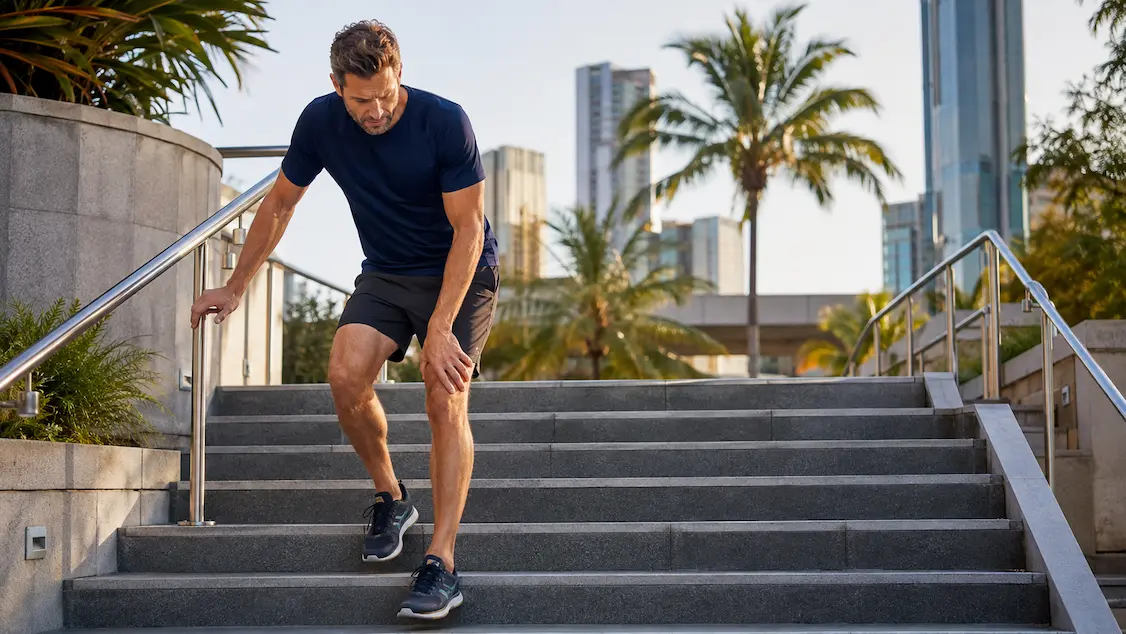
Pain around or behind the kneecap when you use stairs, squat, run downhill or stand after sitting may be patellofemoral pain. This describes a recognisable pattern of front-of-knee pain rather than one single damaged structure. For many people, the first-line plan is education, sensible load adjustment and a progressive exercise programme—not complete rest, routine scans or an automatic procedure.
The same symptoms can have other causes, so the location of the pain, how it started and what the knee can do still matter.
The kneecap sits in a groove at the front of the thighbone and helps the quadriceps straighten the knee. As the knee bends under load, the forces through this joint increase. Stairs, hills, squats, lunges and running can therefore expose a mismatch between what the knee currently tolerates and what is being asked of it.
That mismatch may follow a sudden increase in running, gym work, hills or daily stair use. Strength, movement habits, footwear, sleep and recovery can all influence symptoms, but there is rarely one faulty muscle or one “bad” movement that explains every case. Pain does not by itself prove that the kneecap is wearing away.
Typical patellofemoral pain is usually felt around or behind the kneecap. Pain that is very focal just below the kneecap and linked to jumping may fit patellar tendinopathy better. Pain with recurrent kneecap slipping, a large swelling, true locking or a recent traumatic injury needs a different assessment.
Patellofemoral pain is usually a clinical diagnosis based on the symptom pattern and examination. A scan is not routinely needed when the presentation is typical and there are no concerning features.
Imaging may be considered when the diagnosis remains unclear, there was significant trauma, symptoms are not improving as expected, or another problem such as patellofemoral arthritis is suspected. Even then, an imaging finding should be matched to the person’s symptoms and function rather than treated as the answer on its own.
Recent best-practice guidance places exercise therapy and education at the centre of care. The programme commonly targets the knee and may also include hip exercises, chosen according to the person’s current capacity and the activities they want to regain.
Early changes might include:
There is no single exercise that is best for everyone. The useful dose is challenging enough to build capacity but manageable enough to repeat. Some discomfort may be acceptable in a rehabilitation plan, but a marked or sustained flare is a reason to adjust the range, load or volume.
Taping, prefabricated foot orthoses or movement and running retraining may help selected people as supporting measures. The 2024 best-practice guide recommends tailoring these options to the person’s presentation and preferences rather than adding every treatment at once.
These supports are usually used to make activity or exercise more tolerable while strength and capacity are rebuilt. They do not correct a universal alignment fault, and passive treatment alone is unlikely to replace a progressive plan.
The 2025 multidisciplinary guideline recommends starting with exercise therapy and considering additional conservative options when there has not been a clinically useful change after an adequate trial. The certainty behind some individual treatments remains limited, so progress should be reviewed rather than promised.
Arrange prompt medical assessment after a significant injury if the knee is deformed, rapidly swollen, unable to bear weight, or cannot fully straighten. A hot, red, markedly swollen knee, fever or feeling acutely unwell can indicate infection or another urgent problem.
Review is also sensible when the kneecap has dislocated or repeatedly feels as though it will slip, the knee truly locks, weakness is worsening, or a well-delivered rehabilitation plan is not improving pain and function. Front-of-knee pain can persist for some people, and an early reassessment is more useful than simply repeating the same exercises indefinitely.
Knee pain on stairs often fits a patellofemoral pain pattern, especially when it is felt around or behind the kneecap and is also provoked by squats, hills, running or prolonged sitting. It is usually managed first with education, load adjustment and progressive knee-focused, sometimes hip-focused, exercise.
The practical goal is not to avoid stairs forever. It is to find a tolerable starting point, rebuild capacity and reassess the diagnosis if the knee is not responding as expected.
Morning back stiffness is common and does not, by itself, mean you have inflammatory arthritis. Sleep position, a change in activity, an ordinary...
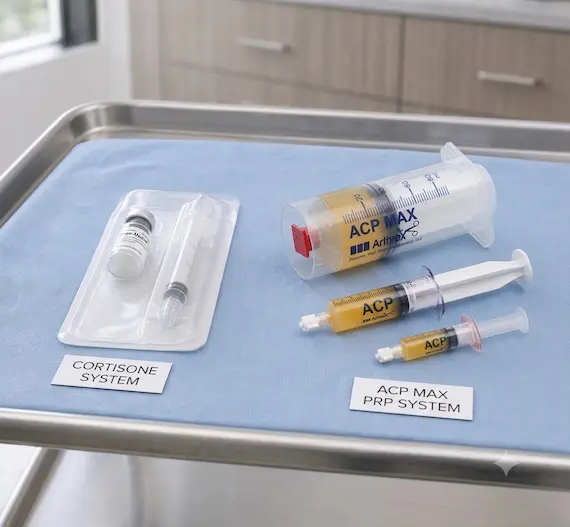
If you have knee osteoarthritis and have been offered an injection, you may be weighing up cortisone against PRP (platelet-rich plasma). They...

Knee osteoarthritis symptoms often fluctuate. A painful flare can feel like something has suddenly gone wrong, but flares are common and do not alway...
Ready for a clearer plan for your back or musculoskeletal pain?
Your assessment focuses on understanding the likely source of your pain and the most appropriate non-surgical options for your diagnosis, with the aim of reducing pain and improving function.
Book an appointment