
Creatine for Muscle and Bone: What the Evidence Actually Shows
Creatine has moved from the gym to the medicine cabinet. Once thought of as a supplement only for bodybuilders and sprinters, it is now being studied...

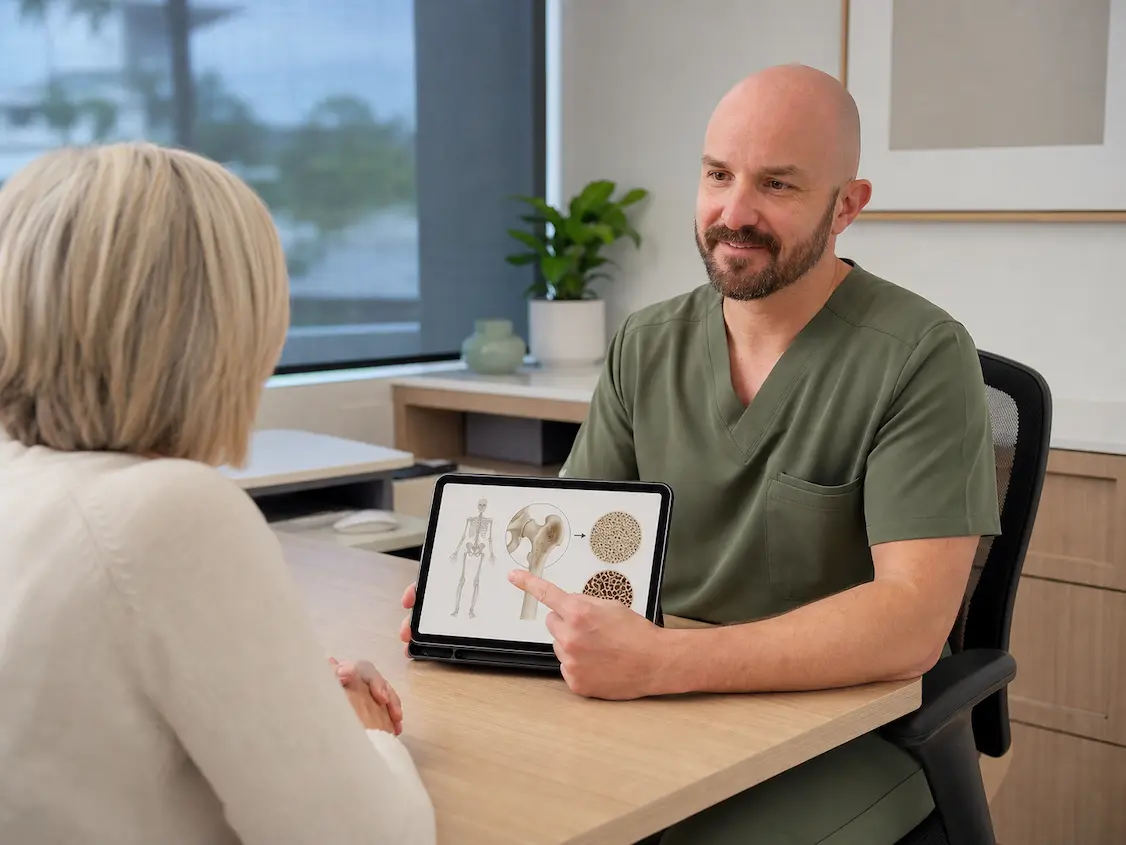
A bone density scan — usually called a DXA or DEXA scan — is one of the main tests used to assess osteoporosis. It can be very useful, but it is not a general health screening test that every adult needs at the same age. The value of a scan depends on your fracture risk, not just on whether you are worried about your bones.
This article is general information. Decisions about testing, Medicare eligibility and treatment should be made with your own GP or treating clinician.
DXA stands for dual-energy X-ray absorptiometry. The scan measures bone mineral density, usually at the hip and lower spine. It is quick, painless and uses a very small amount of radiation.
The result helps estimate the chance of a fragility fracture — a fracture from a fall or force that would not normally break a healthy bone. It is an important piece of information, but it is not the whole story. Two people with the same scan result can have different overall fracture risk because age, previous fractures, falls, medicines and other health conditions also matter.
A scan is commonly considered after a minimal-trauma fracture, particularly after age 50. It is also worth discussing if you have risk factors for lower bone strength, such as a parent who fractured a hip, low body weight, smoking, high alcohol intake, rheumatoid arthritis, coeliac disease or another condition that affects nutrient absorption.
Long-term corticosteroid tablets are another important reason for review. So are early menopause, low sex-hormone states, chronic kidney or liver disease, recurrent falls, and periods of prolonged immobility. Men can develop osteoporosis too, and it is often recognised later because bone health is discussed less often with them.
The current Australian guideline, produced by the RACGP and Healthy Bones Australia, focuses on assessing fracture risk in postmenopausal women and men over 50 rather than treating bone density as an isolated number.
A DXA scan does not explain every ache or back pain. It does not replace an assessment after a significant fall, and it cannot predict with certainty whether someone will fracture. It also does not tell you how strong your muscles, balance or vision are — all of which influence falls risk.
That is why a low result usually leads to a broader conversation rather than an automatic prescription. Your clinician may review fracture history, medicines, nutrition, activity, falls risk and whether there could be another medical cause of bone loss.
You lie comfortably on a padded table while the scanner moves slowly over the relevant areas. There are no injections and the test itself generally takes around 10 to 20 minutes. Tell the imaging provider if you may be pregnant, have recently had a contrast study, or have had spinal or hip surgery, as this can affect the test or its interpretation.
Medicare rebates apply in specific clinical circumstances and can change over time. The imaging service or your GP can tell you whether your situation meets the current requirements before you book.
Bone health is not managed by a scan alone. Resistance and weight-bearing activity where it is safe, adequate nutrition, reducing falls risk and treating osteoporosis when indicated all have a role. For people at higher risk, medicines may be considered; for others, the main value of a DXA may be clarifying risk and guiding follow-up.
If you have had a fracture after a minor fall, have lost height, have persistent new mid-back pain, or have several risk factors, do not wait for a routine screening conversation. Arrange a review. You can read more on our osteoporosis page.
A DXA scan is most useful when it answers a clear question about fracture risk. It is worth discussing with your GP after a minimal-trauma fracture or when risk factors are present. The scan result matters, but the best plan takes the whole person into account.
Creatine has moved from the gym to the medicine cabinet. Once thought of as a supplement only for bodybuilders and sprinters, it is now being studied...

Shoulder scans can be helpful, but they can also be confusing. Many people are told they have tendinosis, bursitis, impingement or a partial-thicknes...

After a hamstring strain, the safest answer to “When can I run again?” is not a fixed number of days. A better decision uses the injury pattern, ...
Ready for a clearer plan for your back or musculoskeletal pain?
Your assessment focuses on understanding the likely source of your pain and the most appropriate non-surgical options for your diagnosis, with the aim of reducing pain and improving function.
Book an appointment