Use this programme for an assessed condition when exercise is appropriate. An acute fracture, tendon rupture, unstable injury or recent operation may need different restrictions. Any specific protection or surgical instructions take priority.
Understanding the condition
After serious injury has been excluded, keeping the neck moving and returning to normal activity gradually are central to whiplash recovery. Persistent symptoms warrant reassessment and support.
Your main rehabilitation goals
Begin small, regular movements and resume tolerable daily tasks.
Mild familiar discomfort up to about 3 out of 10 may be acceptable if steady and movement stays controlled. Sharp or increasing pain is a reason to stop. Pain, swelling and function should return to baseline by the next morning. This is a practical guide, not a proven safety threshold.
Condition specific precautions
Use only after trauma assessment. Do not start resisted exercise if fracture, instability or a significant neurological injury is suspected.
When symptoms increase
Reduce the provoking movement, repetitions or resistance by about one third to one half. Keep other comfortable activity where appropriate. Do not add harder exercise until the response is stable. A sudden major change needs assessment.
Phase 1 Comfortable movement and early loading
Starting point
Exercise is permitted
Main focus
Comfort and control
Progression
Function and recovery. Criteria before calendar
Begin with one set if needed. Practise gentle movement daily if it helps; perform strengthening on 2–3 non-consecutive days each week. Rest 30–60 seconds between easy sets. You do not need to force the full dose on the first day.
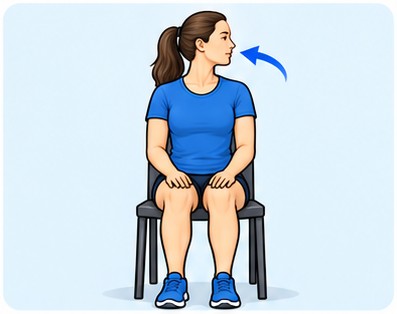
1. Comfortable neck rotation
5–10 repetitions each side, 1–2 times daily.
Action.
Sit tall with shoulders relaxed. Slowly turn the head each way while keeping the trunk forwards.
Technique.
Use an easy range. Do not pull the head or force an end position.
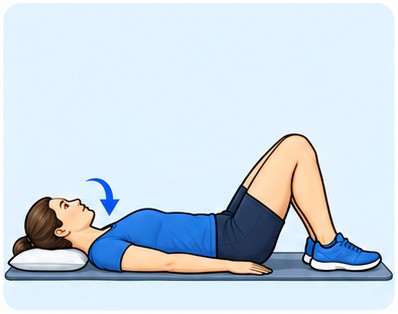
2. Gentle chin nod
5–10 holds of 5 seconds, once daily.
Action.
Lie on your back with the head supported. Make a small yes nod without lifting the head.
Technique.
Keep the jaw relaxed and breathe normally. Use a thin pillow if needed.
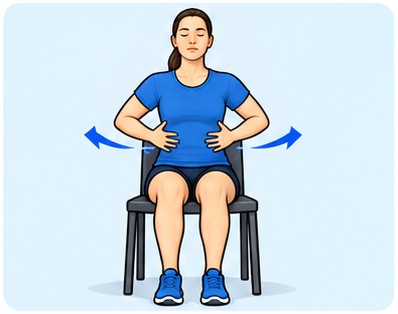
3. Relaxed lower rib breathing
5–8 slow breaths, 1–2 times daily.
Action.
Sit comfortably with your hands on the lower ribs. Breathe gently into the sides of the rib cage, then relax.
Technique.
Avoid large forced breaths or breath holding. Stop if light-headed.
Ready for Phase 2
Gentle movement is comfortable on repeated sessions, daily head or trunk movement is easier and no neurological symptoms are worsening.
Applying this to your condition
Use only after trauma assessment. Do not start resisted exercise if fracture, instability or a significant neurological injury is suspected.
Phase 2 Strength and controlled resistance
Starting point
Phase 1 is tolerated
Main focus
Progressive strength
Progression
Function and recovery. Criteria before calendar
Use 2–3 non-consecutive strength days each week and rest 60–120 seconds between sets. Begin with a resistance that leaves a few controlled repetitions in reserve. Add repetitions first, then a small amount of resistance.
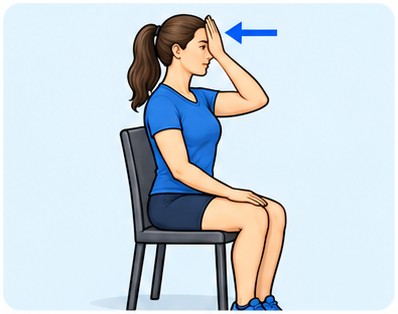
4. Gentle neck resistance
5 holds of 5 seconds in each direction.
Action.
Sit upright. Place a hand on the forehead and press gently into it without moving the head. Repeat at each side.
Technique.
Use light effort initially. Stop for dizziness, unusual headache or spreading arm symptoms.
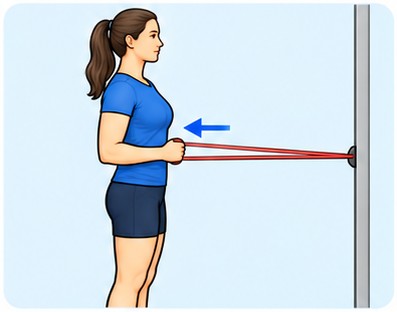
5. Controlled band row
2–3 sets of 10–15.
Action.
With a very light band secured in front and elbows softly bent, gently draw the shoulder blades back a small distance and release.
Technique.
Keep the elbow angle steady and avoid shrugging or leaning back. The shoulder blades make the small movement.
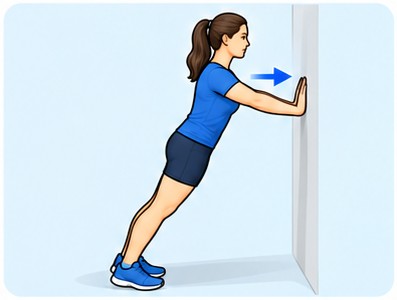
6. Straight arm shoulder blade push
2 sets of 10–15.
Action.
Stand facing a wall with elbows straight. Let the chest move slightly towards the wall, then push the wall away using the shoulder blades.
Technique.
Keep the elbows straight throughout. This is a small shoulder-blade movement rather than a full push up.
Ready to add Phase 3
The neck or shoulder exercises are controlled, daily work tolerance is improving and symptoms return to baseline by the next morning.
Applying this to your condition
Begin small, regular movements and resume tolerable daily tasks. When the top repetition range is easy on several sessions, increase resistance slightly and return to the lower end. Keep the range and movement quality consistent. Avoid increasing weight, repetitions and frequency together.
Phase 3 Functional capacity and return to activity
Starting point
Phase 2 is tolerated
Main focus
Task specific capacity
Progression
Function and recovery. Criteria before calendar
Continue strength work on 2–3 days weekly. Add one new demand at a time. If impact is part of the programme, allow 48–72 hours between demanding impact sessions initially and reduce the strength volume on those days.
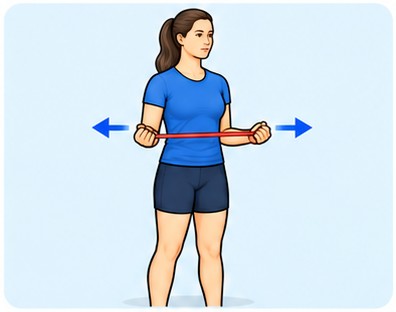
7. Band external rotation
2–3 sets of 8–15, 2–3 days weekly.
Action.
Hold a light elastic band with elbows bent and tucked by the ribs. Move the hands apart, then return slowly.
Technique.
Keep the elbow position steady. Increase resistance only when the current load is controlled.
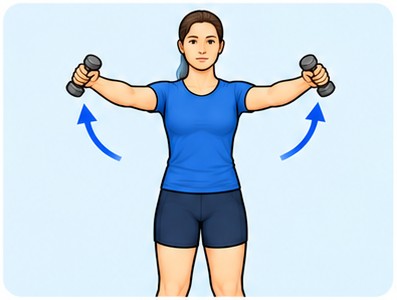
8. Thumbs up arm raise
2–3 sets of 8–12.
Action.
Raise the arms forwards and slightly outwards, thumbs up, to a comfortable height. Lower slowly.
Technique.
Start without weight. Add small weights only when movement is controlled and the next day is settled.
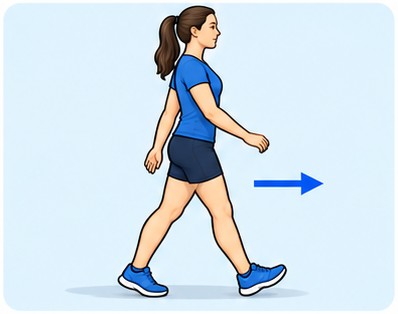
9. Comfortable walking
Start with 5–10 minutes, once or twice daily.
Action.
Walk at an easy pace on level ground. Break longer walks into short bouts.
Technique.
Keep a comfortable stride. Add 1–2 minutes only after several well-tolerated outings.
Ready to increase real activity
Build endurance for the actual task, such as desk work, driving checks, carrying or overhead activity. Do not progress through new neurological symptoms.
Applying this to your condition
Build head movement for driving, work endurance and exercise without waiting for all stiffness to disappear. The final stage should reflect the real task: carrying, lifting, stairs, walking, running or sport. You can finish rehabilitation for daily life without needing to complete running or jumping drills that your activity does not require.
Return to activity and maintain progress
Build head movement for driving, work endurance and exercise without waiting for all stiffness to disappear.
Stage
What to build
Everyday function
Use comfortable movement and daily tasks in manageable blocks. Establish a stable next-day response.
More demanding activity
Increase duration before adding substantial load, speed, hills or more complex positions.
Specific work or sport
Practise the actual task at reduced intensity and duration, then progress it on separate occasions.
Full participation
Complete the required activity repeatedly with control and confidence, without a significant next-day flare. Injury-specific clearance may still be needed.
A practical weekly structure
Use 2–3 non-consecutive strength days, with comfortable mobility or easy activity between them. Start a new activity at less than your usual duration or intensity. Keep harder sessions apart and leave more recovery time when symptoms are still increased. For tendon loading, the condition-specific frequency on the exercise pages takes priority.
Keep the gains
Continue useful strengthening about twice weekly after recovery, alongside regular activity. Break long or repetitive tasks into manageable periods and maintain a plan for a temporary flare. A flare does not automatically mean new damage, but a different or progressive symptom needs assessment.
When to seek review
Seek urgent assessment for new bladder or bowel dysfunction, saddle numbness, progressive limb weakness, new walking imbalance or hand clumsiness. Major trauma, fever, unexplained weight loss or severe unexplained rest pain also needs review. Book reassessment if progress has stalled for 4–6 weeks, function is deteriorating or the same progression repeatedly causes a flare. Do not wait for that interval when a warning symptom is present.
Evidence and practical limits
The programme follows current rehabilitation principles. Exercise selection, sets and progression checks are practical starting prescriptions rather than a trial-validated complete protocol.
NSW State Insurance Regulatory Authority. Guidelines for the management of acute whiplash-associated disorders. Blanpied PR and colleagues. Neck Pain Revision 2017. JOSPT.
doi:10.2519/jospt.2017.0302
Dr Joshua Hatch | The Back Pain Doctor. Handout prepared 1 Nov 2026.
Ready for a clearer plan for your back or musculoskeletal pain?
Book an assessment with Dr Joshua Hatch.
Your assessment focuses on understanding the likely source of your pain and the most appropriate non-surgical options for your diagnosis, with the aim of reducing pain and improving function.
You must have your own regular GP before booking. This service works alongside your GP for focused care. Booking requirements.