Use this programme for an assessed condition when exercise is appropriate. An acute fracture, tendon rupture, unstable injury or recent operation may need different restrictions. Any specific protection or surgical instructions take priority.
Understanding the condition
Fibromyalgia involves widespread pain and often fatigue and unrefreshing sleep. Exercise can help, but benefits are usually gradual and the starting dose must be manageable.
Your main rehabilitation goals
Start with short, comfortable bouts and consistent pacing rather than alternating overactivity and prolonged rest.
Mild familiar discomfort up to about 3 out of 10 may be acceptable if steady and movement stays controlled. Sharp or increasing pain is a reason to stop. Pain, swelling and function should return to baseline by the next morning. This is a practical guide, not a proven safety threshold.
Condition specific precautions
Begin with one set or just a few minutes. Do not impose fixed increases after a flare. Delayed prolonged post-exertional worsening needs reassessment rather than automatic progression.
When symptoms increase
Reduce the provoking movement, repetitions or resistance by about one third to one half. Keep other comfortable activity where appropriate. Do not add harder exercise until the response is stable. A sudden major change needs assessment.
Phase 1 Comfortable movement and early loading
Starting point
Exercise is permitted
Main focus
Comfort and control
Progression
Function and recovery. Criteria before calendar
Start with less than the printed maximum: one set of a few repetitions or a brief activity bout may be enough. Repeat a manageable dose consistently before considering an increase. Do not use fixed weekly increases regardless of symptoms.
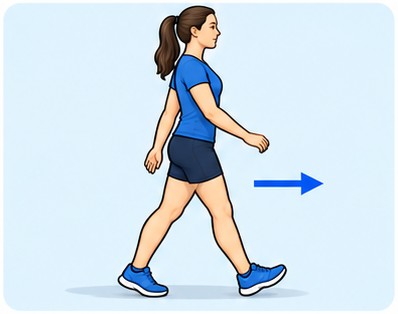
1. Comfortable walking
Start with 1 set of 3–5 repetitions or 2–5 minutes, below your flare threshold.
Action.
Walk at an easy pace on level ground. Break longer walks into short bouts.
Technique.
Repeat a manageable dose before increasing it. Reduce or pause progression after delayed prolonged symptom worsening.
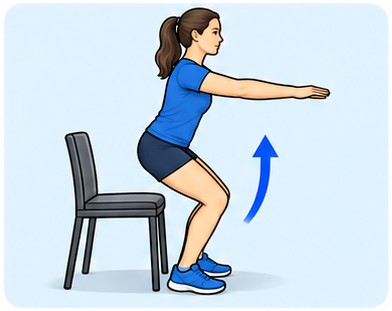
2. Chair sit to stand
Start with 1 set of 3–5 repetitions or 2–5 minutes, below your flare threshold.
Action.
Stand from a firm chair and sit back down slowly. Use the arms if needed at first.
Technique.
Repeat a manageable dose before increasing it. Reduce or pause progression after delayed prolonged symptom worsening.
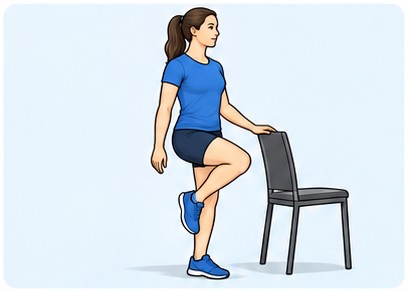
3. Supported single leg balance
Start with 1 set of 3–5 repetitions or 2–5 minutes, below your flare threshold.
Action.
Stand beside a sturdy chair. Lift one foot and balance on the other leg, then change sides.
Technique.
Repeat a manageable dose before increasing it. Reduce or pause progression after delayed prolonged symptom worsening.
Ready for Phase 2
The starting dose is manageable and daily function is stable. Reduce the dose if fatigue or symptoms remain increased after recovery.
Applying this to your condition
Begin with one set or just a few minutes. Do not impose fixed increases after a flare. Delayed prolonged post-exertional worsening needs reassessment rather than automatic progression.
Phase 2 Strength and controlled resistance
Starting point
Phase 1 is tolerated
Main focus
Progressive strength
Progression
Function and recovery. Criteria before calendar
Use 2–3 non-consecutive strength days each week and rest 60–120 seconds between sets. Begin with a resistance that leaves a few controlled repetitions in reserve. Add repetitions first, then a small amount of resistance.
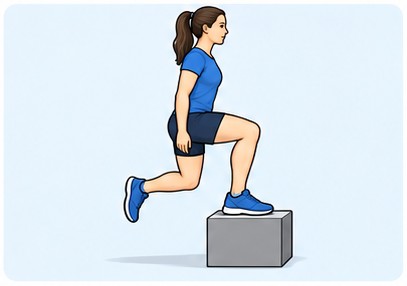
4. Low step up
Start with 1 set of 3–5 repetitions or 2–5 minutes, below your flare threshold.
Action.
Step onto a stable 10–15 cm step. Push through the leading leg to stand tall, then step down slowly.
Technique.
Repeat a manageable dose before increasing it. Reduce or pause progression after delayed prolonged symptom worsening.
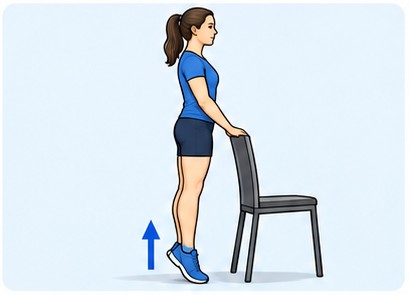
5. Supported double leg heel raise
Start with 1 set of 3–5 repetitions or 2–5 minutes, below your flare threshold.
Action.
Hold a chair lightly. Raise the heels, then lower slowly to the floor.
Technique.
Repeat a manageable dose before increasing it. Reduce or pause progression after delayed prolonged symptom worsening.
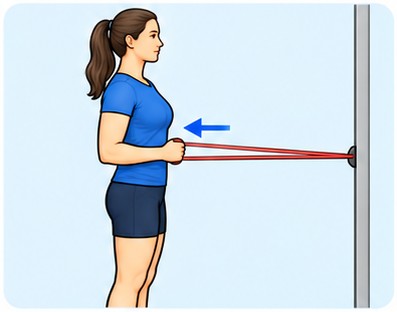
6. Controlled band row
Start with 1 set of 3–5 repetitions or 2–5 minutes, below your flare threshold.
Action.
With a very light band secured in front and elbows softly bent, gently draw the shoulder blades back a small distance and release.
Technique.
Repeat a manageable dose before increasing it. Reduce or pause progression after delayed prolonged symptom worsening.
Ready to add Phase 3
Complete the strength work with safe technique and stable symptoms, without compromising walking or transfers afterwards.
Applying this to your condition
Start with short, comfortable bouts and consistent pacing rather than alternating overactivity and prolonged rest. When the top repetition range is easy on several sessions, increase resistance slightly and return to the lower end. Keep the range and movement quality consistent. Avoid increasing weight, repetitions and frequency together.
Phase 3 Functional capacity and return to activity
Starting point
Phase 2 is tolerated
Main focus
Task specific capacity
Progression
Function and recovery. Criteria before calendar
Continue strength work on 2–3 days weekly. Add one new demand at a time. If impact is part of the programme, allow 48–72 hours between demanding impact sessions initially and reduce the strength volume on those days.
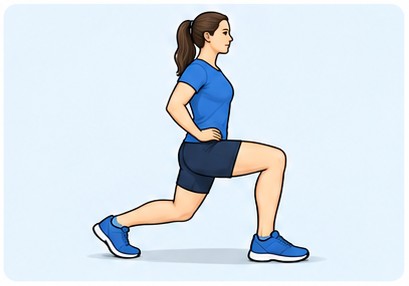
7. Shallow split squat
Start with 1 set of 3–5 repetitions or 2–5 minutes, below your flare threshold.
Action.
Stand with one foot forwards and one back. Bend both knees a small distance, then rise.
Technique.
Repeat a manageable dose before increasing it. Reduce or pause progression after delayed prolonged symptom worsening.
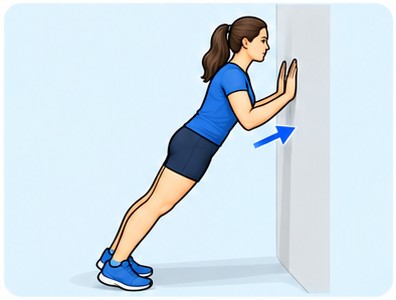
8. Wall push up
Start with 1 set of 3–5 repetitions or 2–5 minutes, below your flare threshold.
Action.
Stand facing a wall, hands at chest height. Bend the elbows to move towards the wall, then push back.
Technique.
Repeat a manageable dose before increasing it. Reduce or pause progression after delayed prolonged symptom worsening.
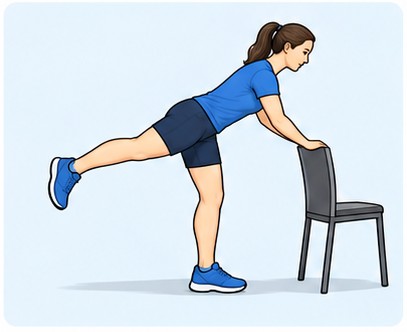
9. Supported hip hinge
Start with 1 set of 3–5 repetitions or 2–5 minutes, below your flare threshold.
Action.
Hold a chair lightly. Fold at the hips with a soft knee bend, then stand tall. Progress to one leg when controlled.
Technique.
Repeat a manageable dose before increasing it. Reduce or pause progression after delayed prolonged symptom worsening.
Ready to increase real activity
Progress activity based on function, recovery and medical disease control. Falls risk, frailty, significant fatigue or structural bone risk may warrant supervision.
Applying this to your condition
Build a sustainable activity routine that improves daily function without repeated crashes. The final stage should reflect the real task: carrying, lifting, stairs, walking, running or sport. You can finish rehabilitation for daily life without needing to complete running or jumping drills that your activity does not require.
Return to activity and maintain progress
Build a sustainable activity routine that improves daily function without repeated crashes.
Stage
What to build
Everyday function
Use comfortable movement and daily tasks in manageable blocks. Establish a stable next-day response.
More demanding activity
Increase duration before adding substantial load, speed, hills or more complex positions.
Specific work or sport
Practise the actual task at reduced intensity and duration, then progress it on separate occasions.
Full participation
Complete the required activity repeatedly with control and confidence, without a significant next-day flare. Injury-specific clearance may still be needed.
A practical weekly structure
Use 2–3 non-consecutive strength days, with comfortable mobility or easy activity between them. Start a new activity at less than your usual duration or intensity. Keep harder sessions apart and leave more recovery time when symptoms are still increased. For tendon loading, the condition-specific frequency on the exercise pages takes priority.
Keep the gains
Continue useful strengthening about twice weekly after recovery, alongside regular activity. Break long or repetitive tasks into manageable periods and maintain a plan for a temporary flare. A flare does not automatically mean new damage, but a different or progressive symptom needs assessment.
When to seek review
Seek prompt assessment for inability to bear weight, a hot red swollen joint, progressive weakness or numbness, a focal bony pain or major new swelling. Sudden calf swelling, chest pain or breathlessness needs urgent assessment. Book reassessment if progress has stalled for 4–6 weeks, function is deteriorating or the same progression repeatedly causes a flare. Do not wait for that interval when a warning symptom is present.
Evidence and practical limits
The programme follows current rehabilitation principles. Exercise selection, sets and progression checks are practical starting prescriptions rather than a trial-validated complete protocol.
Ready for a clearer plan for your back or musculoskeletal pain?
Book an assessment with Dr Joshua Hatch.
Your assessment focuses on understanding the likely source of your pain and the most appropriate non-surgical options for your diagnosis, with the aim of reducing pain and improving function.
You must have your own regular GP before booking. This service works alongside your GP for focused care. Booking requirements.