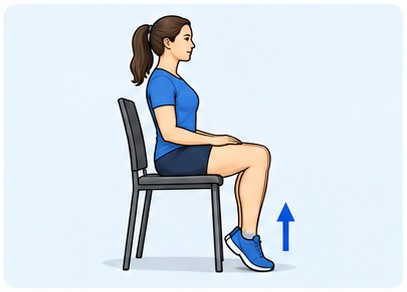
1. Seated heel raise
2–3 sets of 12–15.
- Action.
- Sit with feet flat and knees bent. Raise the heels while keeping the balls of the feet on the floor, then lower slowly.
- Technique.
- Take about 2 seconds each way. Begin without added resistance.
Back Pain Doctor
Back Pain Doctor · Dr Joshua Hatch · backpaindoctor.com.au
Achilles Tendinopathy
Progressive rehabilitation and graded return to activity
Before you start
Use this programme for an assessed condition when exercise is appropriate. An acute fracture, tendon rupture, unstable injury or recent operation may need different restrictions. Any specific protection or surgical instructions take priority.
Achilles tendinopathy causes load-related pain and stiffness at the tendon or heel insertion. Progressive calf loading is the foundation of care.
Build straight knee and bent knee calf strength before fast or spring-like loading.
Mild familiar discomfort up to about 3 out of 10 may be acceptable if steady and movement stays controlled. Sharp or increasing pain is a reason to stop. Pain, swelling and function should return to baseline by the next morning. This is a practical guide, not a proven safety threshold.
For insertional pain keep early heel raises on the floor; avoid lowering below a step or deep calf stretching. Do not use this programme for a suspected rupture.
When symptoms increase
Reduce the provoking movement, repetitions or resistance by about one third to one half. Keep other comfortable activity where appropriate. Do not add harder exercise until the response is stable. A sudden major change needs assessment.
Begin with one set if needed. Practise gentle movement daily if it helps; perform strengthening on 2–3 non-consecutive days each week. Rest 30–60 seconds between easy sets. You do not need to force the full dose on the first day.
2–3 sets of 12–15.
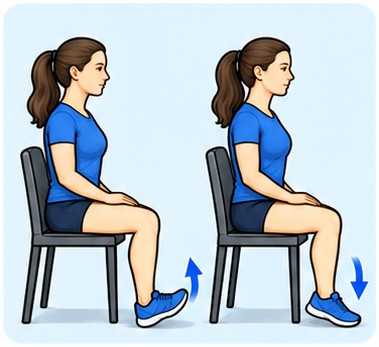
10–20 repetitions, 1–3 times daily.
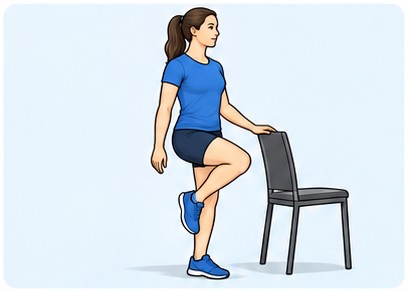
3 holds of 20–30 seconds each side.
Ready for Phase 2
Ordinary walking is comfortable without a limp and the early exercises do not increase symptoms the next morning.
For insertional pain keep early heel raises on the floor; avoid lowering below a step or deep calf stretching. Do not use this programme for a suspected rupture.
Aim for 3 non-consecutive loading days each week. Use slow controlled repetitions, about 3 seconds up and 3 seconds down, with 90–120 seconds between calf or quadriceps sets. Progress resistance as tolerated.
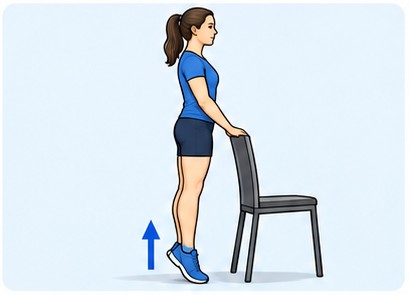
2–3 sets of 10–15.
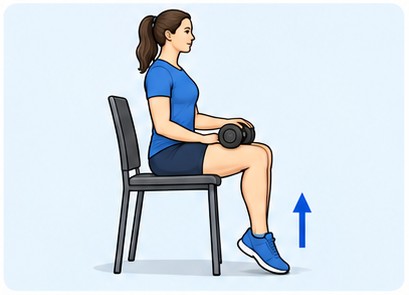
3 sets of 8–15 each leg.
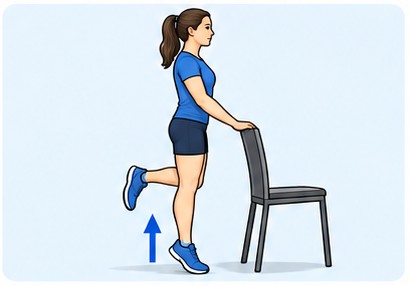
2–3 sets of 8–15 each side.
Ready to add Phase 3
Build towards 20 controlled heel raises and 30 minutes of level walking, as appropriate to the diagnosis. Do not force a painful or structurally restricted foot.
Build straight knee and bent knee calf strength before fast or spring-like loading. When the top repetition range is easy on several sessions, increase resistance slightly and return to the lower end. Keep the range and movement quality consistent. Avoid increasing weight, repetitions and frequency together.
Continue strength work on 2–3 days weekly. Add one new demand at a time. If impact is part of the programme, allow 48–72 hours between demanding impact sessions initially and reduce the strength volume on those days.
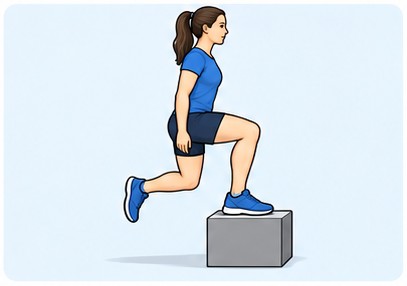
2–3 sets of 8–12 each leg.
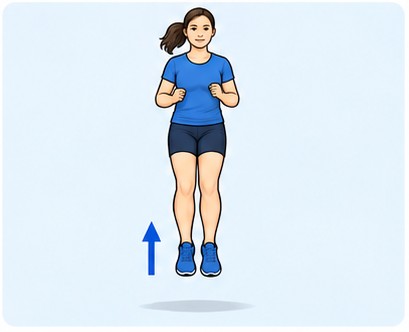
Begin with 2 sets of 10; build to 2 sets of 20.
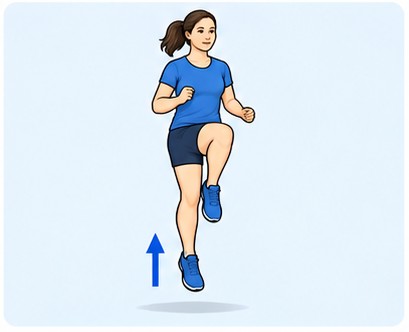
Begin with 2 sets of 5; build towards 15–20 in one set.
Ready to increase real activity
For running or jumping, first tolerate single leg balance, repeated calf raises and low hops with good control and no next-day flare. Do not hop until medically permitted for the injury.
Progress through repeated heel raises, low hops, walk-jog intervals and then sport-specific loads. The final stage should reflect the real task: carrying, lifting, stairs, walking, running or sport. You can finish rehabilitation for daily life without needing to complete running or jumping drills that your activity does not require.
Progress through repeated heel raises, low hops, walk-jog intervals and then sport-specific loads.
| Stage | What to build |
|---|---|
| Everyday function | Use comfortable movement and daily tasks in manageable blocks. Establish a stable next-day response. |
| More demanding activity | Increase duration before adding substantial load, speed, hills or more complex positions. |
| Specific work or sport | Practise the actual task at reduced intensity and duration, then progress it on separate occasions. |
| Full participation | Complete the required activity repeatedly with control and confidence, without a significant next-day flare. Injury-specific clearance may still be needed. |
Use 2–3 non-consecutive strength days, with comfortable mobility or easy activity between them. Start a new activity at less than your usual duration or intensity. Keep harder sessions apart and leave more recovery time when symptoms are still increased. For tendon loading, the condition-specific frequency on the exercise pages takes priority.
After the stated walking, strength and impact checks are met and running is permitted, try 30 seconds of easy jogging followed by 90 seconds of walking, repeated 6–8 times on flat ground. Repeat on 2–3 separate occasions before extending the jogging interval. Leave 48–72 hours between sessions initially. Reduce or stop impact if symptoms increase; shin or bone-related pain should remain pain-free.
Seek prompt assessment for inability to bear weight, a hot red swollen joint, progressive weakness or numbness, a focal bony pain or major new swelling. Sudden calf swelling, chest pain or breathlessness needs urgent assessment. Book reassessment if progress has stalled for 4–6 weeks, function is deteriorating or the same progression repeatedly causes a flare. Do not wait for that interval when a warning symptom is present.
Trial dose
Two loading programmes have been compared directly for pain in the middle of the Achilles tendon, and they did equally well. Both are heavier than Phase 2 of this programme and follow on from it.
Alfredson, Am J Sports Med 1998
A series of 15 recreational runners, average age 44, with long-standing pain in the middle of the tendon. They were compared with 15 similar people who had conventional treatment, but the groups were not chosen at random.
What it found. All 15 were back running at their previous level at 12 weeks, with less pain and calf strength restored to match the other leg. In the comparison group conventional treatment failed and all 15 went on to surgery.
Limits. Small, and not a randomised trial. It applies to pain in the middle of the tendon. For pain at the heel attachment, lowering below the step is avoided (see the precautions on this page). How weight was added is not given in the sources read.
Result from the trial abstract. Dose as set out in a later trial protocol that follows the Alfredson method (Munteanu, J Foot Ankle Res 2009).
A randomised trial of 58 people with more than three months of pain in the middle of the tendon, comparing heavy slow resistance with eccentric training for 12 weeks and following them for a year.
What it found. Both groups improved substantially in symptoms and pain and held the improvement at one year, with no difference between them. People completed 92% of the heavy slow resistance sessions against 78% of the eccentric sessions. Satisfaction at 12 weeks was 100% against 80%, a difference that did not reach significance.
Limits. Needs gym equipment. The summaries read do not name the individual exercises.
Result from the trial abstract. Sets, load and frequency from a published summary of the protocol (Burton, Front Physiol 2021).
Silbernagel, Am J Sports Med 2007
A randomised trial of 38 people. Everyone did the same strengthening programme. One group was allowed to keep running and jumping, guided by a pain-monitoring rule. The other stopped those activities for the first six weeks.
What it found. No difference in the rate of improvement. Symptom scores rose from 57 to 85 out of 100 at 12 months in the group that kept running and from 57 to 91 in the group that rested, and continuing did no harm.
Limits. A small trial. The exact pain limits used are in the paper and have not been checked for this page.
From the trial abstract.
How this fits the programme above. Phases 1 and 2 of this programme build to single leg heel raises. The trial programmes start from there. They are the heavy loading stage and run for 12 weeks.
A trial result describes what happened to the people in that trial. It does not predict the result for an individual, and a trial programme should be started only after an assessment. Reviewed 13 Nov 2026.
The programme follows current rehabilitation principles. Exercise selection, sets and progression checks are practical starting prescriptions rather than a trial-validated complete protocol.
Dr Joshua Hatch | The Back Pain Doctor. Handout prepared 1 Nov 2026.