Hip Pain: Causes, Symptoms, and Treatment Options
Hip pain is a common condition that can affect your mobility and quality of life. Whether caused by an injury, overuse, or a degenerative condition, ...

Pain on the outside of the hip is often blamed on “bursitis”, but many cases are better described as greater trochanteric pain syndrome, or GTPS. This can involve the gluteal tendons, the bursa and the way the hip is being loaded.
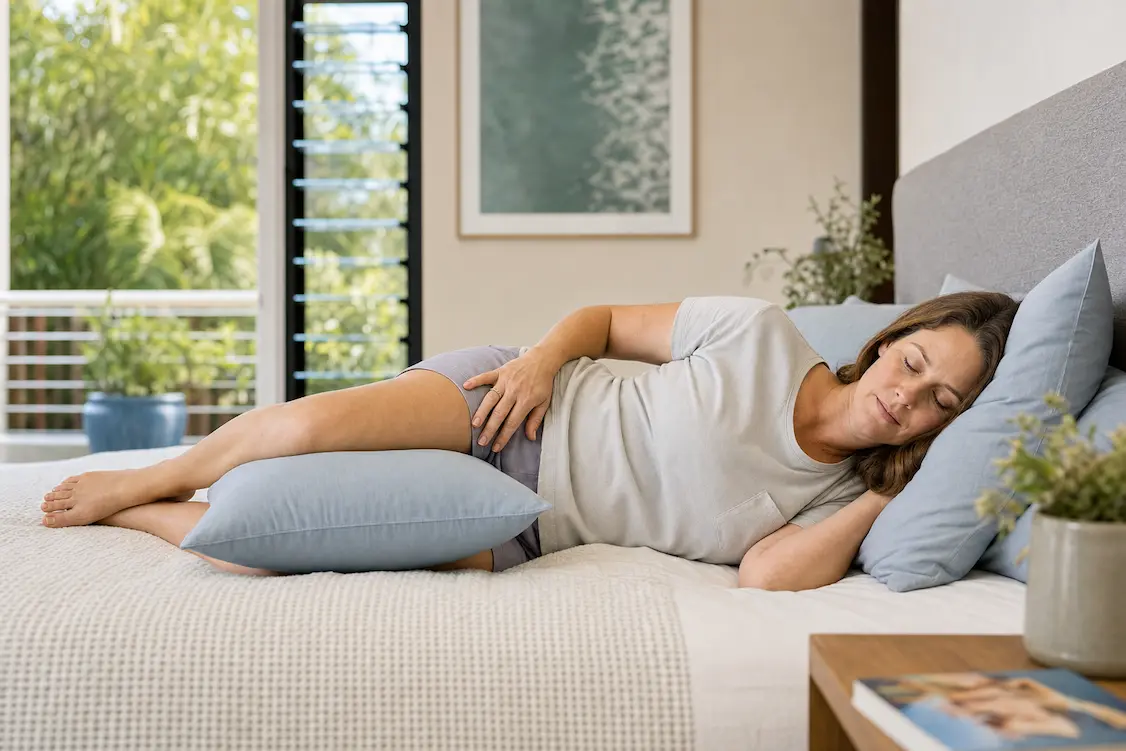
One classic symptom is pain lying on the affected side. Some people also feel pain walking uphill, climbing stairs, standing on one leg, or sitting with the legs crossed.
The gluteal tendons help stabilise the pelvis when you stand, walk and climb stairs. They can become painful when the load exceeds what they tolerate. Compression over the outside of the hip can also aggravate symptoms.
That is why side-lying, crossing legs and hanging on one hip while standing can be provocative.
Pain from the lumbar spine, hip joint osteoarthritis and referred pain can overlap. A careful examination helps distinguish pain on the outside of the hip from groin-dominant hip joint pain or nerve-related symptoms.
Reducing compressive positions is often useful. That may mean sleeping with a pillow between the knees, avoiding prolonged side-lying on the painful side, and not standing with the hip dropped out to one side.
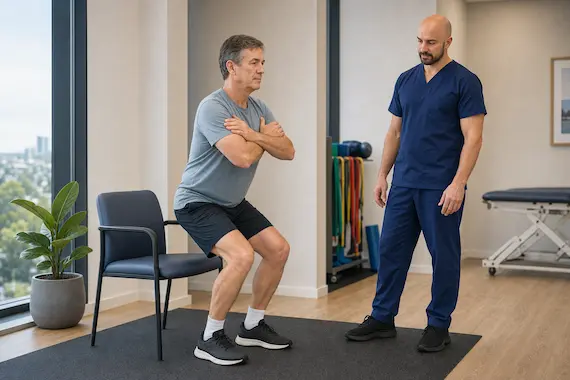
Strengthening is usually central, but it needs to be introduced carefully. Too much single-leg loading too early can flare symptoms.
Cortisone injections may settle pain for some people, especially when sleep is badly affected, but they are not a complete long-term solution. Other options may be considered depending on the diagnosis and previous response.
You can read more on our greater trochanteric pain syndrome page.
Side-lying hip pain is often treatable, but it needs the right diagnosis and a load plan that respects the gluteal tendons.
Hip pain is a common condition that can affect your mobility and quality of life. Whether caused by an injury, overuse, or a degenerative condition, ...

Morning back stiffness is common and does not, by itself, mean you have inflammatory arthritis. Sleep position, a change in activity, an ordinary...

Pain around or behind the kneecap when you use stairs, squat, run downhill or stand after sitting may be patellofemoral pain. This describes a re...
Ready for a clearer plan for your back or musculoskeletal pain?
Your assessment focuses on understanding the likely source of your pain and the most appropriate non-surgical options for your diagnosis, with the aim of reducing pain and improving function.
Book an appointment