
Hamstring Strain: When Can You Start Running Again?
After a hamstring strain, the safest answer to “When can I run again?” is not a fixed number of days. A better decision uses the injury pattern, ...
Tennis elbow, or lateral epicondylitis, is a common condition that affects many people beyond tennis players. It results from overuse of the forearm muscles and tendons, causing pain and discomfort. This article sets out the causes, symptoms and treatment options for tennis elbow, including where injection treatments such as prolotherapy and PRP may have a role.
Full clinical guide: Tennis and golfer’s elbow — assessment and non-surgical management. This article is a short overview.
Tennis elbow occurs when the tendons in the elbow are strained from repetitive movements. This strain leads to inflammation and pain on the outer part of the elbow. While commonly associated with tennis, it can develop in anyone engaging in repetitive arm activities, such as painting or typing.
The condition results from microscopic tears in the tendon attached to the lateral epicondyle, a bony prominence on the outer elbow. Over time, these tears cause pain and tenderness, making everyday tasks challenging.
Symptoms of tennis elbow typically develop gradually. You might notice pain or burning on the outer elbow, worsening with time. Pain can extend down the forearm and wrist, especially when gripping objects or lifting. Weakness in the hand and wrist is also common.
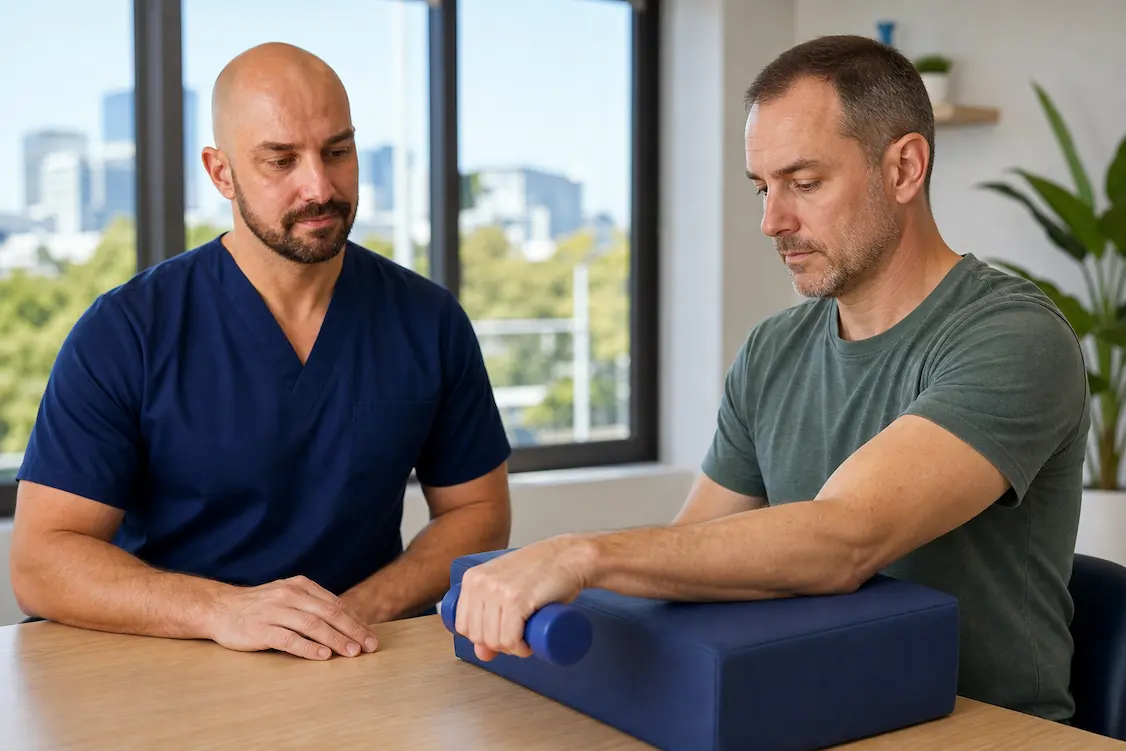
Most cases of tennis elbow can be managed conservatively. Resting the elbow and avoiding activities that exacerbate the pain is crucial. Ice packs and anti-inflammatory medications can reduce pain and swelling. Physical therapy focuses on strengthening the forearm muscles and improving flexibility.
In cases where conservative treatments don’t provide relief, corticosteroid injections or surgery to remove damaged tissue might be considered.
Prolotherapy and PRP offer promising alternatives for chronic tennis elbow. Prolotherapy involves injecting an irritant solution into the affected tendon to stimulate the body’s healing response. This treatment helps repair damaged tissue and reduce pain.
PRP therapy uses your own blood to extract platelets rich in growth factors. Injected into the affected area, PRP promotes tissue healing and reduces inflammation, offering long-term relief from pain.
Preventing tennis elbow involves proper technique and ergonomics, especially if your activities involve repetitive movements. Using the correct equipment and taking regular breaks to stretch and strengthen the forearm muscles can reduce strain on the tendons.
Maintaining a regular exercise regimen and avoiding overuse are key to preventing recurrence.
Most tennis elbow is managed with load management and a graded tendon-loading programme. Where symptoms persist, injection treatments such as prolotherapy and PRP are sometimes considered; neither is a guaranteed cure and the evidence varies by indication, so suitability is assessed against the diagnosis and discussed alongside the alternatives.
After a hamstring strain, the safest answer to “When can I run again?” is not a fixed number of days. A better decision uses the injury pattern, ...

Morning back stiffness is common and does not, by itself, mean you have inflammatory arthritis. Sleep position, a change in activity, an ordinary...

Pain around or behind the kneecap when you use stairs, squat, run downhill or stand after sitting may be patellofemoral pain. This describes a re...
Ready for a clearer plan for your back or musculoskeletal pain?
Your assessment focuses on understanding the likely source of your pain and the most appropriate non-surgical options for your diagnosis, with the aim of reducing pain and improving function.
Book an appointment