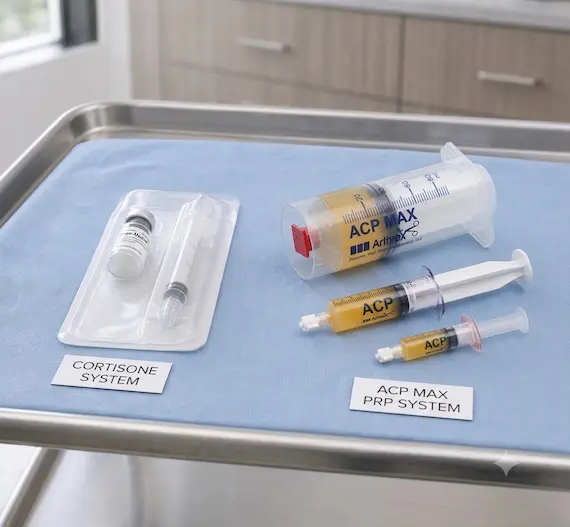
Cortisone vs PRP for Knee Osteoarthritis: What the Evidence Says
If you have knee osteoarthritis and have been offered an injection, you may be weighing up cortisone against PRP (platelet-rich plasma). They...

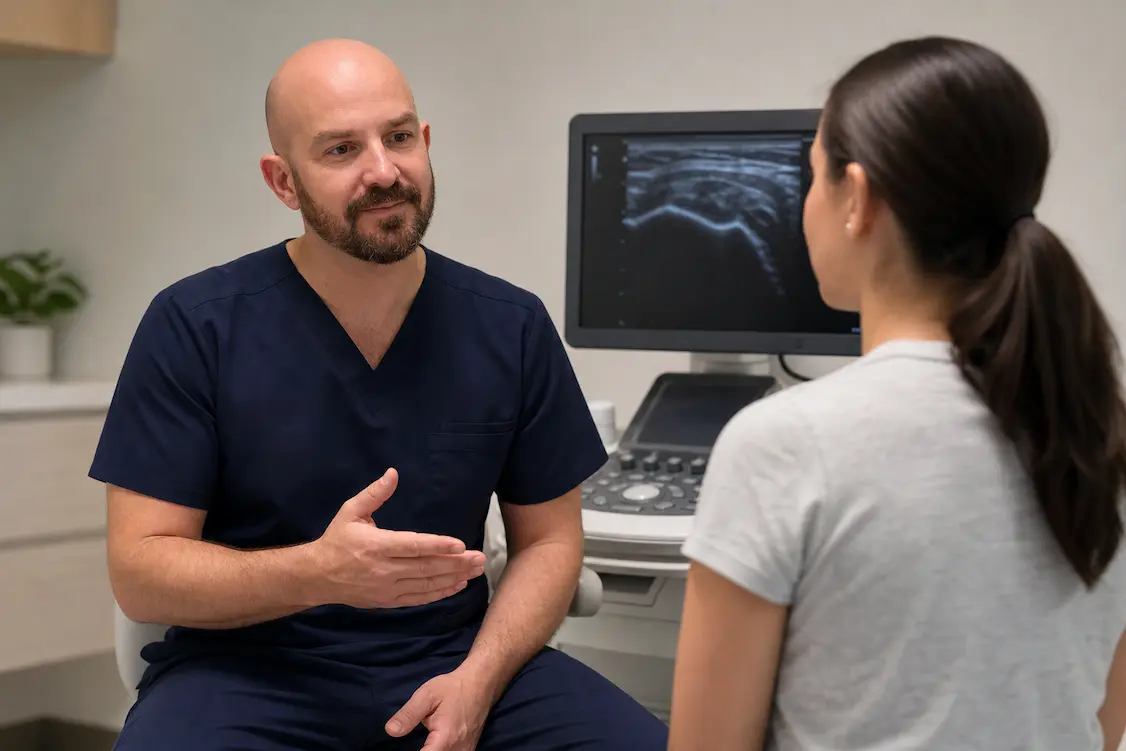
Cortisone injections are commonly used for musculoskeletal pain. They can be very helpful in the right setting, but they are often misunderstood.
Cortisone is a corticosteroid medication. Its main role is to reduce inflammation. That can make it useful for conditions where inflammation is a major driver of pain, such as some bursitis, arthritis flares, synovitis or irritated joint capsules.
The biggest advantage is that cortisone can work relatively quickly. Some people notice improvement within days. This can help settle a flare, improve sleep, or create a window to restart rehabilitation.
That does not mean it repairs a tendon, rebuilds cartilage or permanently fixes the underlying driver. It is a symptom-modifying treatment.
For tendinopathy, repeated cortisone can be a poor long-term strategy. It may reduce pain in the short term but can be associated with worse longer-term outcomes in some tendon conditions. For osteoarthritis, benefit is usually temporary and should be balanced against the overall treatment plan.
This is why the diagnosis matters. “Pain” is not enough information. The tissue and mechanism matter.
Some injections can be performed accurately by anatomical landmarks. Others are more reliable with ultrasound guidance, especially small joints, deep targets or areas near important structures. Accuracy is not the only factor in success, but it matters.
An injection should come with a plan. That might include load modification, strengthening, physiotherapy, weight management, footwear changes, or review of work and sport demands. If the same problem keeps flaring, the bigger question is why.
Cortisone can be useful when the target and goal are clear. It is best thought of as one tool, not the whole toolbox.
If you have knee osteoarthritis and have been offered an injection, you may be weighing up cortisone against PRP (platelet-rich plasma). They...

An injection is only useful if it reaches the right target. Some injections can be performed reliably using anatomical landmarks, but others are more...

If a finger clicks, catches or becomes stuck as you bend and straighten it, the problem may be trigger finger. The name sounds dramatic, but it u...
Ready for a clearer plan for your back or musculoskeletal pain?
Your assessment focuses on understanding the likely source of your pain and the most appropriate non-surgical options for your diagnosis, with the aim of reducing pain and improving function.
Book an appointment